

SKU #58427
·
27 views
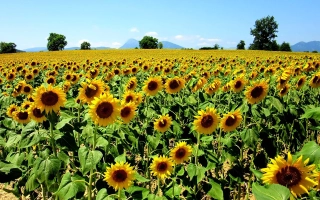
Sunflower Kleopatra
Sunflower
OOO 'SOLNEChNAYa STRANA'User rating
0 votes0% positive reviews
No ratings yet — be the first.
Oil Content
45-50%
Vegetation Period
80-90 days
Plant; height
170-180 cm
Registration year
2018
About product

Early-maturing hybrid featuring high oil content and comprehensive resistance to a wide range of fungal pathogens.
Oil Content
45-50%
Vegetation Period
80-90 days
Plant; height
170-180 cm
Registration year
2018
Description
Genetic Potential and Phytosanitary Defense
The «Cleopatra» sunflower hybrid from the «Solnechnaya Strana» brand is a breeding product focused on early maturity and high oil content in intensive farming conditions. The key feature of this hybrid is its compressed vegetation period (80–90 days), which shifts the grain filling phase away from peak summer heat stress.
Morphological Parameters
The hybrid plants reach a height of 170–180 cm. This compactness is achieved through optimized distribution of plastic substances: energy is directed toward the formation of a high-quality head rather than excessive vegetative mass. The optimal stem height facilitates smoother combine harvesting and minimizes mechanical losses.
Protective Mechanisms
The genetic code of «Cleopatra» includes multi-level immunity, which is critical for yield preservation under adverse phytosanitary conditions. The originators (O. A. Belyaeva, I. A. Koshkarev, R. S. Nazarov) focused on the following threats:
- Fundamental resistance to downy mildew and bacteriosis: the hybrid reduces the need for heavy fungicide application during early growth stages.
- Barriers against fungal pathogens: high resistance levels against alternaria, sclerotinia, phomopsis, root rots, and black leg. This allows for seeding in rotations with minimum tillage, where the infection load is typically higher.
An oil content of 45–50% makes «Cleopatra» an economically attractive option for processing facilities, ensuring a high yield of final products per ton of grain. This technological solution from «Solnechnaya Strana» provides farmers with predictable results within a short time frame.
Crop & resistance
Crop
Specifications
| Oil Content | 45-50% |
|---|---|
| Vegetation Period | 80-90 days |
| Plant; height | 170-180 cm |
| Registration year | 2018 |
| Catalog | Catalog → Sunflower |
| Manufacturer | OOO 'SOLNEChNAYa STRANA' |
| Legal data |
Show · 3
|
| Country | Country |
Store offers
Prices are updated on loadLoading offers…
Aggregator catalog: prices are collected automatically from store websites, normalized by AI and converted at the current exchange rate. Before ordering, confirm the price and availability on the store's website. This block is not indexed by search engines — the data is loaded after the page opens.
Not yet комментариев. Be the first!
Alternatives
Sunflower seeds · similar varieties


See also
Often considered together with this variety





Recently viewed
Products you’ve viewed on this site
Reviews · 0