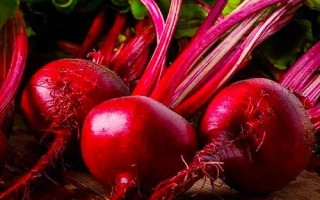
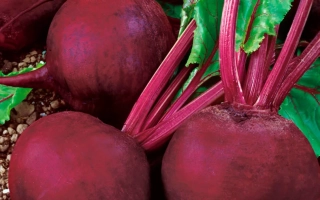
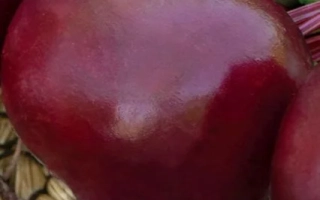
Rodena F1 table beet is a mid-late, high-yielding hybrid developed by the Japanese company Sakata. The vegetation period is about 120-125 days, which allows for a stable yield in open ground. The root crops have a cylindrical shape with a thin tail, smooth dark-red skin, and bright red flesh without radial rings. The weight of one root crop reaches up to 300 grams, and the sugar content varies from 8 to 15%, providing a pleasant taste and crunchy homogeneous structure. Rodena beet is suitable for both fresh consumption and processing; additionally, the yield is highly uniform and has excellent storability, allowing root crops to be stored for a long time without quality loss. The culture is highly resistant to major diseases such as cercosporosis, powdery mildew, and rhizoctonia, which significantly reduces risks during cultivation. Rodena F1 is heat-loving and drought-resistant, responds well to fertilization, watering, and soil loosening. Optimal development is observed with sparse planting on fertile soils, which contributes to a maximum yield of up to 6-7 kg per square meter. The hybrid seeds are suitable for cultivation in various climatic conditions, including territories of Ukraine, and are supplied in packages of 120-125 pieces. To achieve the best results, it is recommended to maintain a sowing density within 450-550 thousand seeds per hectare. Due to its agrotechnical characteristics and resistance to adverse factors, Rodena F1 table beet is a reliable choice for farmers and gardeners seeking to obtain a high-quality and stable yield of table beet with excellent taste and market properties.