


SKU #63626
·
67 views
Soy Variety SK VEDA
Soybean
LLC COMPANY 'SOEVY COMPLEX'User rating
0 votes0% positive reviews
No ratings yet — be the first.
Growing Season
110-120 days
Plant; plant height
70-80cm
Plant: Height of Lower Pod Attachment
12-14cm
Seeds: oil content
22-23%
About product

The SK VEDA soy variety is an early-maturing, semi-determinate, tall variety designed for cultivation in arid conditions without irrigation. The vegetative period is 111 days, with maturity occurring in the third decade of August. Plants reach a height of approximately 83 cm, with the first pod attached at a height of 13 cm. The variety is characterized by a powerful root system, which ensures hig…
Growing Season
110-120 days
Plant; plant height
70-80cm
Plant: Height of Lower Pod Attachment
12-14cm
Seeds: oil content
22-23%
Description
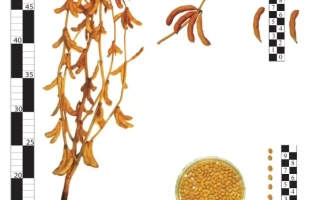
The SK VEDA soy variety is an early-maturing, semi-determinate, tall variety designed for cultivation in arid conditions without irrigation. The vegetative period is 111 days, with maturity occurring in the third decade of August. Plants reach a height of approximately 83 cm, with the first pod attached at a height of 13 cm. The variety is characterized by a powerful root system, which ensures high drought resistance and allows for successful cultivation in regions with limited moisture. The flowers are purple, the hypocotyl has an anthocyanin coloration, and the main stem has gray pubescence. The seeds are yellow with a gray hilum; the mass of 1000 seeds is 155 g. SK VEDA demonstrates high yield: average yield in the North Caucasus region reaches 19.6 c/ha, while maximum indicators on various plots, including the Baksan State Research Station of the Kabardino-Balkar Republic and farms of the Republic of Kazakhstan, vary from 37.4 to 42.4 c/ha. The potential yield of the variety can reach 4.4 t/ha, and in repeated sowings, 2.6 t/ha. The sowing rate depends on the sowing method: with wide-row sowing at a spacing of 45-70 cm, 450-550 thousand seeds per hectare (80-110 kg) are recommended, while with row sowing at a spacing of 15-20 cm, 600-700 thousand seeds per hectare (100-140 kg) are recommended. The protein content in the seeds of the SK VEDA variety is 34.91%, and fat content is 23.61%, which makes it valuable for use in the food and feed industries. The variety is included in the State Register of Breeding Achievements of the Russian Federation and is recommended for cultivation in zones with a latitude of 40-51° North, covering main and repeated sowings in the North Caucasus region. Thanks to its agronomic characteristics and drought resistance, SK VEDA is a reliable choice for farmers seeking a stable and high soybean yield in complex climatic conditions.
Video · 2 videos
Suggest a video →Crop & resistance
Crop
Specifications
| Growing Season | 110-120 days |
|---|---|
| Plant; plant height | 70-80cm |
| Plant: Height of Lower Pod Attachment | 12-14cm |
| Seeds: oil content | 22-23% |
| Seeds: protein content | 35-37% |
| Registration year | 2019 |
| Catalog | Catalog → Soybean |
| Manufacturer | LLC COMPANY 'SOEVY COMPLEX' |
| Legal data |
Show · 3
|
| Country | Russia |
Store offers
Prices are updated on loadLoading offers…
Aggregator catalog: prices are collected automatically from store websites, normalized by AI and converted at the current exchange rate. Before ordering, confirm the price and availability on the store's website. This block is not indexed by search engines — the data is loaded after the page opens.
Not yet комментариев. Be the first!
Alternatives
Soybean seeds · similar varieties






See also
Often considered together with this variety


Recently viewed
Products you’ve viewed on this site
Reviews · 0