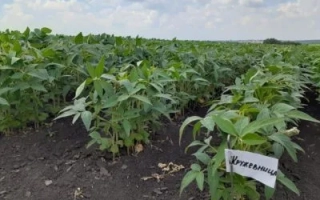
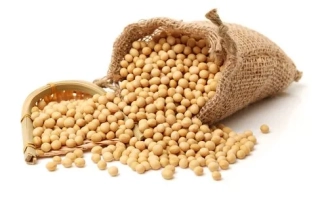
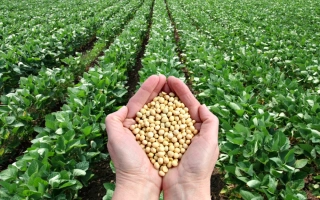
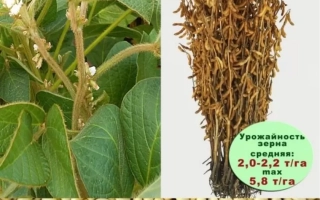
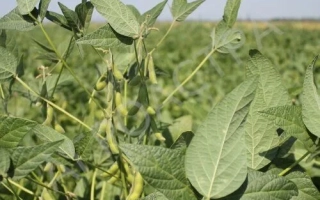
Arno soybean is a medium-early, large-seeded variety that differs in stable high yield and is adapted for cultivation in various regions. The plant is determinate, of medium height, with white flowers and yellow seeds; the mass of 1000 seeds is about 181 grams. The variety's vegetative period lasts approximately 117 days, which ensures timely maturation and allows for effective use of the variety in the agro-climatic conditions of the Amur region and other regions.
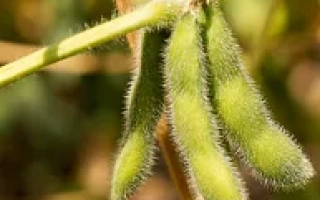
Arno variety is characterized by high protein content in seeds - about 40.8%, as well as a significant level of fat - 17.4%, which makes it attractive for use in the food and feed industries. Plants have gray pubescence of the main stem and lanceolate side leaflets, which is a distinctive morphological feature of the variety. Due to resistance to lodging and shattering, as well as high resistance to pests and diseases, Arno demonstrates stable and large yields, reaching a potential of up to 5.5 tons per hectare.
Arno soybean also differs in resistance to high temperatures and drought, which allows successful cultivation under conditions with adverse climatic factors. The recommended sowing rate is 55-70 kg per hectare, and plant height varies from 130 to 150 cm. All these characteristics make Arno variety a profitable choice for farmers seeking to obtain high-quality and stable soybean yields.