


SKU #63628
·
66 views
SENTYABRINKA
Soybean
User rating
0 votes0% positive reviews
No ratings yet — be the first.
Growing Season
100-110 days
Plant; plant height
50-60cm
Plant: Height of Lower Pod Attachment
12-14cm
Seeds: oil content
18-19%
About product

The Sentyabrinka soybean variety is an early-maturing and high-yielding hybrid developed at the Federal State Budgetary Institution Federal Scientific Center of the All-Russian Institute of Soybean (FNC VNIIS) and included in the State Register of Breeding Achievements of the Russian Federation. Plants of this variety have an indeterminate growth type with medium height of about 56 cm, with a lowe…
Growing Season
100-110 days
Plant; plant height
50-60cm
Plant: Height of Lower Pod Attachment
12-14cm
Seeds: oil content
18-19%
Description
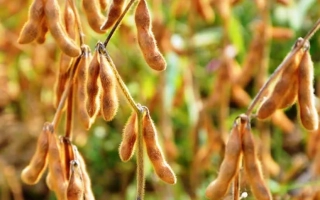
The Sentyabrinka soybean variety is an early-maturing and high-yielding hybrid developed at the Federal State Budgetary Institution Federal Scientific Center of the All-Russian Institute of Soybean (FNC VNIIS) and included in the State Register of Breeding Achievements of the Russian Federation. Plants of this variety have an indeterminate growth type with medium height of about 56 cm, with a lower pod attachment height of 12 cm. The vegetation period is 107 days, which ensures early maturity and flowering from very early to early. Seeds are yellow-green with a yellow aril, and the mass of 1000 seeds reaches 162 g. Protein content in seeds is high — 40.92%, while fat content is 18.68%, making this variety especially valuable for producing protein products.
The variety is distinguished by complex resistance to fungal and bacterial diseases, as well as resistance to soil waterlogging and lodging, which contributes to stable yields under various climatic conditions. Sentyabrinka is well adapted to mechanized cultivation and recommended for growing in southern, central, and northern soil-and-climatic zones of the Far East and Siberia. The optimal sowing density at harvest is 600–650 thousand plants per hectare. With wide-row sowing and 45 cm interrow spacing, yield increases by approximately 1 ton per hectare due to a greater number of branches.
For successful cultivation of the variety, sowing is recommended when soil temperature reaches 15°C at a depth of 5 cm during the period from May 20 to June 5. An important condition is soil phosphorus (P2O5) content of at least 40 mg/kg. Seeds are treated with microbiological fertilizers, ammonium molybdate solution, and biopesticides before sowing, while in wet years, fungicides are used. Seed dressing and plant treatment with fungicides during the growing season are also recommended to protect against diseases and increase yield.
The variety is distinguished by complex resistance to fungal and bacterial diseases, as well as resistance to soil waterlogging and lodging, which contributes to stable yields under various climatic conditions. Sentyabrinka is well adapted to mechanized cultivation and recommended for growing in southern, central, and northern soil-and-climatic zones of the Far East and Siberia. The optimal sowing density at harvest is 600–650 thousand plants per hectare. With wide-row sowing and 45 cm interrow spacing, yield increases by approximately 1 ton per hectare due to a greater number of branches.
For successful cultivation of the variety, sowing is recommended when soil temperature reaches 15°C at a depth of 5 cm during the period from May 20 to June 5. An important condition is soil phosphorus (P2O5) content of at least 40 mg/kg. Seeds are treated with microbiological fertilizers, ammonium molybdate solution, and biopesticides before sowing, while in wet years, fungicides are used. Seed dressing and plant treatment with fungicides during the growing season are also recommended to protect against diseases and increase yield.
Crop & resistance
Crop
Specifications
| Growing Season | 100-110 days |
|---|---|
| Plant; plant height | 50-60cm |
| Plant: Height of Lower Pod Attachment | 12-14cm |
| Seeds: oil content | 18-19% |
| Seeds: protein content | 39-41% |
| Registration year | 2019 |
| Catalog | Catalog → Soybean |
| Legal data |
Show · 2 |
| Country | Russia |
Store offers
Prices are updated on loadLoading offers…
Available at: Свое Фермерство
Aggregator catalog: prices are collected automatically from store websites, normalized by AI and converted at the current exchange rate. Before ordering, confirm the price and availability on the store's website. This block is not indexed by search engines — the data is loaded after the page opens.
Not yet комментариев. Be the first!
Alternatives
Soybean seeds · similar varieties




See also
Often considered together with this variety


Recently viewed
Products you’ve viewed on this site
Reviews · 0