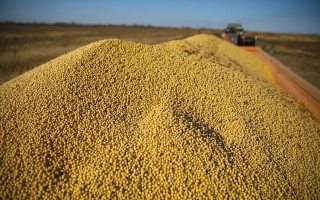
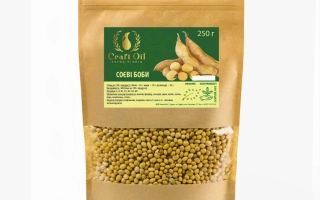
The soybean variety "Light" is an early-maturing crop with a maturation period of 75-80 days and a biological characteristic of HU 2350. Plants have a determinate growth type, a semi-bushy shape, a height of 90-110 cm, and light green rhomboid leaflets. The flowers are gray, while the pods are brown with spherical-flattened yellow seeds and light hilums. The mass of 1000 seeds is about 142 g, indicating the variety's large fruitfulness. The height of the lower pod attachment ranges from 15-17 cm, which facilitates harvest collection.
The variety is distinguished by its high protein content, exceeding 42.5%, and fat content of about 19.2%, making it valuable for the food industry and forage purposes. Seed yield varies from 7.3 to 17.4 c/ha, while dry matter yield ranges from 18.0 to 56.3 c/ha, with a technological potential yield of 42-52 c/ha. "Light" possesses high disease resistance, including to Phytophthora due to the presence of the Rps6 gene, as well as lodging resistance thanks to a well-developed root system. The variety is well adapted to cold and humid conditions, heat-tolerant, and drought-resistant, ensuring stable photosynthesis and high productivity under stress conditions.
The recommended sowing density is 700-800 thousand plants per hectare. The variety efficiently utilizes fertilizers and is suitable for cultivation on all soil types. Due to its characteristics, "Light" can be grown as a monoculture and is a promising choice for farmers focused on obtaining high-quality and high-protein soy harvests. Seeds of this variety are widely used in the food industry, feed production, and agrotechnical purposes, including sowing operations and soil fertility improvement.