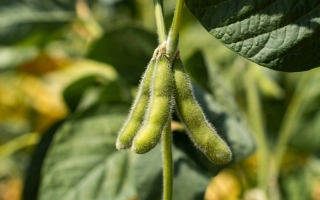
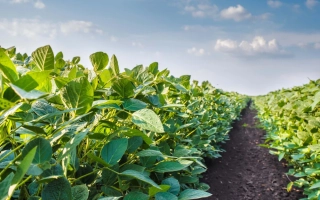
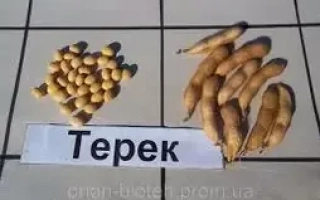
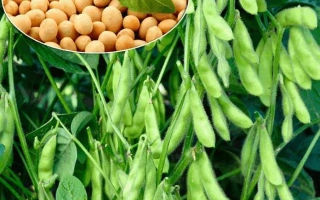
The Alena soybean variety is a mid-season hybrid recommended for cultivation in the Far Eastern region of Russia, including Amur Oblast and Khabarovsk Krai. The plants are indeterminate in development, of medium height, semi-erect, reaching an average of 85-110 cm, with the lowest pods attached at a height of up to 25 cm. The leaves are trifoliate, lanceolate in shape, and the flowers are purple. The seeds are spherical, yellow with a smooth surface and a small oval yellow hilum. The vegetative period of the variety ranges from 110 to 125 days, averaging 117 days. The mass of 1000 seeds varies from 152 to 200 g, with protein content in the seeds reaching up to 39.4% and fat content up to 23.3%. The average yield in the region is about 21.8 c/ha, with a productivity potential of up to 39.0 c/ha according to the breeder. The best yield indicators reach 31.3 c/ha. Sowing is recommended from May 5th to May 15th when the soil warms up to 10 °C at a depth of 5 cm, using narrow-row or wide-row sowing with row spacings of 15, 30, or 45 cm. The optimal plant density at harvest is 400-500 thousand stems per hectare. Alena soybeans differ in their high protein and fat content in the seeds, making them attractive for use in the food and feed industries. Due to adaptation to the climatic conditions of the Far Eastern region, the variety demonstrates stable productivity and resilience. Its characteristics, including seed shape and color, as well as growth parameters, allow for effective use of the variety in regional agro-technical systems.