
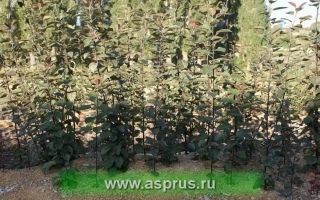

SKU #72550
·
48 views
PMK SK 3
Rootstocks
SCFSCVVUser rating
0 votes0% positive reviews
No ratings yet — be the first.
Type of graft
Dwarf
Compatibility with Cultures
Apple, Cherry
Soil Preferences
Heavy loams with drainage
Registration year
2023
About product

The low-growing rootstock PMK SK 3 (varieties 3‑106 and 3‑107) is a hybrid of *S. lannesiana* №2 × *P. avium* (L.) Franz-Josef, developed by scientists Kuznetsova A.P., Drygina A.I., and Gridnev S.I. It is distinguished by high resistance to cockle, lack of root suckers, and good anchorage of grafted trees even in dense, heavy, and over-wetted soils. Due to its heat resistance, the rootstock maint…
Type of graft
Dwarf
Compatibility with Cultures
Apple, Cherry
Soil Preferences
Heavy loams with drainage
Registration year
2023
Description
The low-growing rootstock PMK SK 3 (varieties 3‑106 and 3‑107) is a hybrid of *S. lannesiana* №2 × *P. avium* (L.) Franz-Josef, developed by scientists Kuznetsova A.P., Drygina A.I., and Gridnev S.I. It is distinguished by high resistance to cockle, lack of root suckers, and good anchorage of grafted trees even in dense, heavy, and over-wetted soils. Due to its heat resistance, the rootstock maintains its properties at high temperatures, making it suitable for cultivation in various climatic conditions.
One of the key advantages of PMK SK 3 is the high percentage of rooting of green cuttings and a short period of root formation – just 12‑15 days. This ensures rapid formation of a powerful, dense root system, promoting stable growth of grafted apple and cherry trees. In the southern regions of Russia, the rootstock demonstrates seed material yield up to 80 % and germination up to 89 %, making it technologically advantageous for nurseries.
PMK SK 3 is also responsive to growth-regulating agents, microbiological preparations, and bio-enzymes. It reduces the crown of cherry and cherry trees by about 30 % compared to variety VSL‑2, which facilitates the care of garden crops. Thanks to its high adaptability, the rootstock allows to reduce the list of agro-treatments: the need to grow seedlings in a nursery is excluded, as well as reproduction and plant care processes are simplified. These properties make PMK SK 3 a valuable tool for breeding and mass production of fruit trees.
One of the key advantages of PMK SK 3 is the high percentage of rooting of green cuttings and a short period of root formation – just 12‑15 days. This ensures rapid formation of a powerful, dense root system, promoting stable growth of grafted apple and cherry trees. In the southern regions of Russia, the rootstock demonstrates seed material yield up to 80 % and germination up to 89 %, making it technologically advantageous for nurseries.
PMK SK 3 is also responsive to growth-regulating agents, microbiological preparations, and bio-enzymes. It reduces the crown of cherry and cherry trees by about 30 % compared to variety VSL‑2, which facilitates the care of garden crops. Thanks to its high adaptability, the rootstock allows to reduce the list of agro-treatments: the need to grow seedlings in a nursery is excluded, as well as reproduction and plant care processes are simplified. These properties make PMK SK 3 a valuable tool for breeding and mass production of fruit trees.
Crop & resistance
Disease resistance
Specifications
| Type of graft | |
|---|---|
| Compatibility with Cultures | |
| Soil Preferences | |
| Registration year | 2023 |
| Catalog | Catalog → Rootstocks |
| Manufacturer | SCFSCVV |
| Legal data | |
| Country | Russia |
Store offers
Prices are updated on loadLoading offers…
Aggregator catalog: prices are collected automatically from store websites, normalized by AI and converted at the current exchange rate. Before ordering, confirm the price and availability on the store's website. This block is not indexed by search engines — the data is loaded after the page opens.
Not yet комментариев. Be the first!
Alternatives
Rootstocks · similar varieties




See also
Often considered together with this variety




Recently viewed
Products you’ve viewed on this site
Reviews · 0