


SKU #38711
·
30 views
Vespa
Rapeseed
NPZ LembkeUser rating
0 votes0% positive reviews
No ratings yet — be the first.
Type of Rape
Winter rape
Flowering Duration
20-30 days
Plant; height
160-170 cm
Plant: Branching
Average
About product

Reliable German hybrid with up to 50% oil content and excellent harvestability.
Type of Rape
Winter rape
Flowering Duration
20-30 days
Plant; height
160-170 cm
Plant: Branching
Average
Description
Field performance of 'Vespa' winter oilseed rape
Choosing 'Vespa' winter rape by NPZ Lembke is a strategic move for growers who prioritize reliability and high output. As a farmer, what I value most in this hybrid is its predictable behavior—it doesn't require exotic cultivation schemes, yet it performs consistently under standard management, delivering solid results year after year.
Growth patterns and field handling
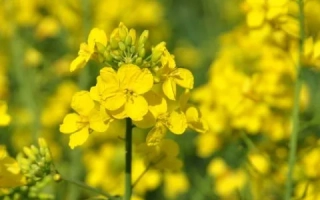
The plants reach a height of 160–170 cm. This is a sweet spot for modern machinery—tall enough to suppress early weed competition, but structurally sound enough to resist lodging during harsh weather. The moderate branching pattern ensures the pods are distributed evenly, which makes the harvest phase much smoother and reduces grain loss at the header. A key feature is the 20–30 day flowering window, which provides a nice buffer against spring climate fluctuations.
Yield quality and financial returns
The economic value of 'Vespa' is clearly anchored in its oil content, which consistently hits the 45–50% mark. This level of quality is a major advantage when dealing with crushers and processors. Furthermore, the low erucic acid content keeps the crop in line with the strictest market requirements.
- Ideal plant height minimizing header losses.
- Uniform pod formation due to moderate branching.
- High oil content with low erucic acid levels.
- Resilience to environmental stress during the flowering period.
Regarding day-to-day operation, this hybrid is highly responsive to standard nutrient management programs. The maturity profile is quite uniform across the field, allowing the operator to set the combine settings once and proceed with minimal adjustments. Simply put, 'Vespa' offers the kind of German technical precision that translates directly into a higher tonnage in the bunker.
Specifications hover over for a hint about the specification
|
Type of Rape
Type of Rape
Winter rape is a long-day plant, characterized by weak winter hardiness. It may be damaged at temperatures of -8 to -10°C, so it is most commonly grown in regions with mild winters. The most favorable temperature for growth and development of rape is 18-24°C. It requires moisture... |
|
|---|---|
|
Flowering Duration
Flowering Duration
Flowering begins on the 37-48th day after emergence and lasts 20-40 days. As for pollination, rapeseed is facultative self-pollinating (up to 20% of plants can self-pollinate cross-pollinated), the spatial isolation norm on seed plots is not less than 500m. |
20-30 days |
| Plant; height | 160-170 cm |
| Plant: Branching | |
| Oil Content | 45-50% |
|
Erucic Acid Content
Erucic Acid Content
The amount of erucic acid is assessed as a percentage of the total fatty acid content in seed oil. Initially, rapeseed varieties containing less than 5% erucic acid in their seeds were named low-erucic or "0" varieties. Later, this threshold was changed, and "0" varieties now ref... |
|
| Registration year | 2024 |
| Catalog | Catalog → Rapeseed |
| Manufacturer | NPZ Lembke |
| Country | Germany |
Store offers
Prices are updated on loadLoading offers…
Aggregator catalog: prices are collected automatically from store websites, normalized by AI and converted at the current exchange rate. Before ordering, confirm the price and availability on the store's website. This block is not indexed by search engines — the data is loaded after the page opens.
Not yet комментариев. Be the first!
Alternatives
Rapeseed seeds · similar varieties



See also
Often considered together with this variety





Recently viewed
Products you’ve viewed on this site
Reviews · 0