
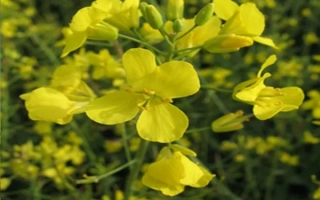


SKU #38922
·
38 views
Traviata
Rapeseed
KWSUser rating
0 votes0% positive reviews
No ratings yet — be the first.
Type of Rape
Winter rape
Hybrid Type
Simple Linear
Flowering Duration
30-40 days
Plant; height
130-150 cm
Store offers · 1 from 1 stores
Prices are updated on loadLoading offers…
Available at: Gryadka · Marigen · semenata-com · Yablukom
Aggregator catalog: prices are collected automatically from store websites, normalized by AI and converted at the current exchange rate. Before ordering, confirm the price and availability on the store's website. This block is not indexed by search engines — the data is loaded after the page opens.
About product

Traviata — a medium-early hybrid of winter rapeseed type 00 (erucic acid-free, low-glucosinolate), intended for cultivation in various soil-climatic conditions, including the North Caucasus region. This hybrid is characterized by high adaptability and winter hardiness, with a winter hardiness rating of 4.6. Plants are of medium height — approximately 133 cm, with green, medium-long, and wide leave…
Type of Rape
Winter rape
Hybrid Type
Simple Linear
Flowering Duration
30-40 days
Plant; height
130-150 cm
Description
Traviata — a medium-early hybrid of winter rapeseed type 00 (erucic acid-free, low-glucosinolate), intended for cultivation in various soil-climatic conditions, including the North Caucasus region. This hybrid is characterized by high adaptability and winter hardiness, with a winter hardiness rating of 4.6. Plants are of medium height — approximately 133 cm, with green, medium-long, and wide leaves, with medium serrated edges. The vegetation period lasts about 269 days, with flowering occurring in the early-to-medium range. Traviata exhibits resistance to lodging and shattering, ensuring yield retention and enabling direct combine harvesting.
The Traviata hybrid responds well to intensive cultivation technologies and highly mineralized soils, forming high-yielding crops. It consistently delivers good results on medium and light soils, demonstrating drought tolerance and winter hardiness. In spring, the hybrid's growth processes recover slowly, helping to avoid damage from early spring frosts, while early flowering contributes to timely yield formation. During the spring-summer vegetation period, the plant forms numerous productive branches with a high number of pods, positively influencing yield.
The average seed yield in the region is approximately 22.9 centners per hectare, with maximum yields exceeding 40 centners per hectare. The oil content in the seeds reaches 47%, and oil yield amounts to 6.6 centners per hectare. In field trials, the Traviata hybrid demonstrated a yield of up to 4.54 tons per hectare on loamy-sandy soils. The recommended sowing density at harvest time is 450–550 thousand plants per hectare, depending on the cultivation zone. The hybrid is suitable for sowing in both optimal and late periods, expanding agronomic planning possibilities.
The Traviata hybrid responds well to intensive cultivation technologies and highly mineralized soils, forming high-yielding crops. It consistently delivers good results on medium and light soils, demonstrating drought tolerance and winter hardiness. In spring, the hybrid's growth processes recover slowly, helping to avoid damage from early spring frosts, while early flowering contributes to timely yield formation. During the spring-summer vegetation period, the plant forms numerous productive branches with a high number of pods, positively influencing yield.
The average seed yield in the region is approximately 22.9 centners per hectare, with maximum yields exceeding 40 centners per hectare. The oil content in the seeds reaches 47%, and oil yield amounts to 6.6 centners per hectare. In field trials, the Traviata hybrid demonstrated a yield of up to 4.54 tons per hectare on loamy-sandy soils. The recommended sowing density at harvest time is 450–550 thousand plants per hectare, depending on the cultivation zone. The hybrid is suitable for sowing in both optimal and late periods, expanding agronomic planning possibilities.
Specifications hover over for a hint about the specification
|
Type of Rape
Type of Rape
Winter rape is a long-day plant, characterized by weak winter hardiness. It may be damaged at temperatures of -8 to -10°C, so it is most commonly grown in regions with mild winters. The most favorable temperature for growth and development of rape is 18-24°C. It requires moisture... |
|
|---|---|
| Hybrid Type | |
|
Flowering Duration
Flowering Duration
Flowering begins on the 37-48th day after emergence and lasts 20-40 days. As for pollination, rapeseed is facultative self-pollinating (up to 20% of plants can self-pollinate cross-pollinated), the spatial isolation norm on seed plots is not less than 500m. |
30-40 days |
| Plant; height | 130-150 cm |
| Plant: Branching | |
| Oil Content | 45-50% |
|
Erucic Acid Content
Erucic Acid Content
The amount of erucic acid is assessed as a percentage of the total fatty acid content in seed oil. Initially, rapeseed varieties containing less than 5% erucic acid in their seeds were named low-erucic or "0" varieties. Later, this threshold was changed, and "0" varieties now ref... |
|
| Number of plants per hectare | 400 thousand pcs/ha, 500 thousand pcs/ha |
| Yield Potential | 40-50 ц/га |
| Registration year | 2014 |
| Catalog | Catalog → Rapeseed |
| Manufacturer | KWS |
| Country | Germany |
Not yet комментариев. Be the first!
Alternatives
Rapeseed seeds · similar varieties






See also
Often considered together with this variety







Recently viewed
Products you’ve viewed on this site
Reviews · 0