


SKU #67254
·
38 views
VICTORIAN
Pumpkin
Ваше хозяйствоUser rating
0 votes0% positive reviews
No ratings yet — be the first.
Plant Type
Unlimited Whip
Fruit; shape
Cylindrical with thickening on one end
Fruit; weight
8-10 kg
Laziness
Excellent
About product

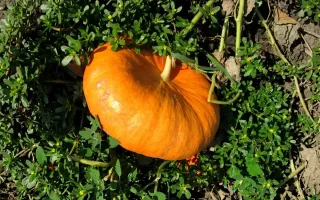
The Victorian pumpkin variety belongs to medium-maturing table varieties with a maturation period from germination of 115-130 days. Plants form a main tendril ranging from 2.7 to 3.4 meters in length. The fruits have an elongated pear-shaped form, smooth gray-green rind, which acquires an orange-green hue upon ripening. Fruit sizes reach up to 60 cm in length and 25-27 cm in diameter, while mass v…
Plant Type
Unlimited Whip
Fruit; shape
Cylindrical with thickening on one end
Fruit; weight
8-10 kg
Laziness
Excellent
Description
The Victorian pumpkin variety belongs to medium-maturing table varieties with a maturation period from germination of 115-130 days. Plants form a main tendril ranging from 2.7 to 3.4 meters in length. The fruits have an elongated pear-shaped form, smooth gray-green rind, which acquires an orange-green hue upon ripening. Fruit sizes reach up to 60 cm in length and 25-27 cm in diameter, while mass varies from 10 to 12.5 kg. The seed cavity is large, located from the apex to the middle of the fruit.
The pumpkin flesh is bright orange, juicy, crunchy, sweet, and aromatic. Due to its taste qualities, it is versatile in application: suitable for preparing porridges, fruit salads, fillings for sweet pies, and also for obtaining thick juice. Moreover, the flesh is excellent for preserves—jams, marinades, candied fruits, and jellies, which makes the variety particularly attractive for home canning.
The Victorian variety is distinguished by high yield, drought resistance, and resistance to low temperatures, ensuring a stable harvest. The pumpkin withstands long-term storage and transportation over long distances without losing the commercial appearance and quality of the fruits. These characteristics make it in demand for both personal use and commercial cultivation.
The pumpkin flesh is bright orange, juicy, crunchy, sweet, and aromatic. Due to its taste qualities, it is versatile in application: suitable for preparing porridges, fruit salads, fillings for sweet pies, and also for obtaining thick juice. Moreover, the flesh is excellent for preserves—jams, marinades, candied fruits, and jellies, which makes the variety particularly attractive for home canning.
The Victorian variety is distinguished by high yield, drought resistance, and resistance to low temperatures, ensuring a stable harvest. The pumpkin withstands long-term storage and transportation over long distances without losing the commercial appearance and quality of the fruits. These characteristics make it in demand for both personal use and commercial cultivation.
Crop & resistance
Crop
Specifications hover over for a hint about the specification
| Plant Type | |
|---|---|
|
Fruit; shape
Fruit; shape
Spherical, oval, flattened or cylindrical shape. |
|
|
Fruit; weight
Fruit; weight
Table watermelons weigh 0.6-16 kg. |
8-10 kg |
| Laziness | |
| Registration year | 2023 |
| Catalog | Catalog → Pumpkin |
| Manufacturer | Ваше хозяйство |
| Legal data |
Show · 4
|
| Country | Russia |
Store offers
Prices are updated on loadLoading offers…
Aggregator catalog: prices are collected automatically from store websites, normalized by AI and converted at the current exchange rate. Before ordering, confirm the price and availability on the store's website. This block is not indexed by search engines — the data is loaded after the page opens.
Not yet комментариев. Be the first!
Alternatives
Pumpkin seeds · similar varieties


See also
Often considered together with this variety




Recently viewed
Products you’ve viewed on this site
Reviews · 0