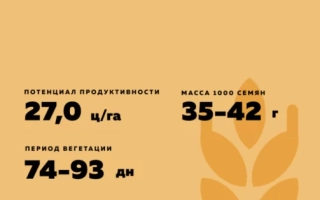
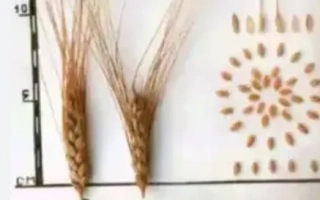
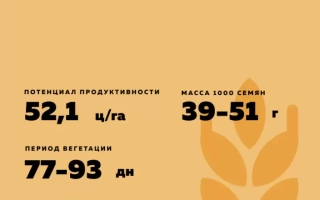
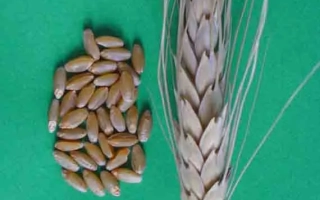
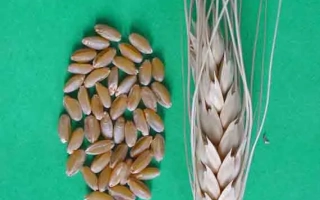
KRASNOKUTKA 10 is a spring durum wheat (Triticum durum Desf.) variety developed at the Krasnokutskaya Selection and Experimental Station of the Southern-Eastern Scientific Research Institute of Agriculture (NIISKh Yugo-Vostoka) through individual selection from a hybrid distinguished by drought tolerance. The variety belongs to the durum group, characterized by a prismatic ear 6-8 cm long of medium density with red awns 13-16 cm long. The grain is white, elongated or semi-elongated, large, with high vitreousness and natural weight; the weight of 1000 grains varies from 35 to 49 grams. The plant is of medium height (48-96 cm), with a semi-erect culm and medium straw length, resistant to lodging, and possesses a strong waxy bloom on the ear and sheath of the flag leaf.
The variety is mid-maturing, with a vegetative period of 72 to 93 days, maturing several days later than the standard variety Donaia Elegia. It is distinguished by high drought resistance, resistance to lodging, powdery mildew, and dusty bunt, as well as moderate susceptibility to septoria and rusts. Thanks to these qualities and high productivity, KRASNOKUTKA 10 shows stable yields, exceeding standard varieties by up to 13.7 c/ha, with maximum indicators up to 89.4 c/ha in favorable conditions.
The grain quality of the variety is highly valued for protein content up to 16.6% and raw gluten up to 35.5%, which ensures good pasta qualities and high product rating. The variety is recommended for cultivation in the Central Black Earth region, including the Belgorod, Kursk, Lipetsk, and Oryol regions, and is also successfully grown in southern regions of Russia and neighboring countries. KRASNOKUTKA 10 is suitable for the production of pasta products, semolina, and coarse-ground flour, combining high yield with excellent grain quality and resistance to adverse climatic conditions.