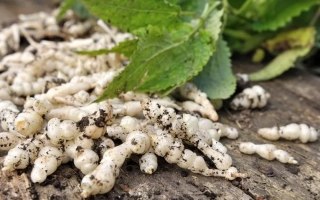
Perilla (shiso) is an annual herbaceous plant of the Lamiaceae family, often called curly, Nanking, shrub, or Japanese parsley. Bushes reach a height of 60 to 140 cm and have a lush structure with obovate leaves, toothed edges, and fine hairs. Varieties differ in coloration: green, red, purple, maroon-brown, variegated, and bicolor.
Perilla leaves are rich in vitamins A and carotene, as well as calcium, potassium, magnesium, and iron. Due to essential oils, they have a spicy-aromatic taste that can vary from anise to lemon, rosemary, cinnamon, or caramel. This makes them a valuable ingredient for salads, fish and vegetable dishes, pickling, stewing meat, making stuffed cabbage rolls, and even in teas and infusions. The antioxidant properties of leaves contribute to strengthening the immune system and are used in detox programs.
Perilla is easily grown from seeds: sowing is done after the threat of frost, and seeds can be soaked beforehand. The plant prefers fertile, well-lit soil but does not tolerate drought and heat. Regular trimming of shoot tops promotes the formation of dense bushes. Perilla also effectively repels pests and can be grown near cabbage, eggplants, tomatoes, potatoes, and berry bushes. In autumn, it can be transplanted into pots for winter cultivation, and the plant grows back quickly after pruning.
As a decorative plant, perilla is valued for its bright greenery and aroma; when cultivated in pots during winter, it retains its properties as a spicy addition to dishes. Cut leaves can be dried or canned, while fresh ones can be stored in the refrigerator for up to a week. Perilla is a versatile plant that combines beneficial properties, aroma, and decorative appeal.