


SKU #64394
·
48 views
NEMCHINOVSKIY 100
Pea
ФГБНУ Федеральный исследовательский центр «Немчиновка»User rating
0 votes0% positive reviews
No ratings yet — be the first.
Growth Direction
On grain
Plant Type
Leafless (Bearded)
Growing Season
70-80 days
Plant; height
Average Height
About product

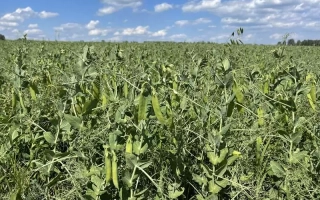
Nemchinovskiy 100 is a mid-season, leafless pea variety intended for cultivation in the Central region of Russia, including the Moscow, Ryazan, and Tul regions. This variety is characterized by high resistance to lodging and shattering, which ensures crop preservation and ease of harvesting. Seeds are spherical with yellow cotyledons and a black hilum; the mass of 1000 seeds varies from 160 to 228…
Growth Direction
On grain
Plant Type
Leafless (Bearded)
Growing Season
70-80 days
Plant; height
Average Height
Description
Nemchinovskiy 100 is a mid-season, leafless pea variety intended for cultivation in the Central region of Russia, including the Moscow, Ryazan, and Tul regions. This variety is characterized by high resistance to lodging and shattering, which ensures crop preservation and ease of harvesting. Seeds are spherical with yellow cotyledons and a black hilum; the mass of 1000 seeds varies from 160 to 228 grams depending on growing conditions. The vegetative period from germination to physiological maturity is about 70–80 days, while seedlings appear within 7–10 days at an optimal temperature of 13–15°C. The Nemchinovskiy 100 stem is of medium height (80–120 cm), light green in color with large stipules. Foliage is moderate, with 9–11 internodes before the first inflorescence and a total of 12–14 internodes. Pods are light brown, slightly curved, usually two per pedicel, containing 4–5 seeds, sometimes up to 8. Protein content in the grain ranges from 23.5 to 27%, making this variety valuable for feed and food use. The optimal sowing rate is 1.2–1.4 million viable seeds per hectare, with field germination reaching about 80%, ensuring a plant density of 80–100 per square meter. Despite high yields reaching up to 43.4 centners per hectare, the Nemchinovskiy 100 variety is susceptible to ascochyta blight and root rots, requiring the application of appropriate agronomic measures for plant protection. Under favorable conditions and with proper care, yields of 4–5 tons of grain per hectare can be achieved. This pea variety is suitable for cultivation in a temperate climate and is optimal for use in the agriculture of Russia's Central region due to the combination of high productivity, grain quality, and resistance to adverse weather conditions.
Crop & resistance
Crop
Disease resistance
Specifications
| Growth Direction | |
|---|---|
| Plant Type | |
| Growing Season | 70-80 days |
| Plant; height | Average Height |
| Beans; Weight per 1000 seeds | 180-200 grams, 200-220 grams |
| Beans; Protein Content | 24-26% |
| Suitability for direct cleaning | |
| Registration year | 2010 |
| Catalog | Catalog → Pea |
| Manufacturer | ФГБНУ Федеральный исследовательский центр «Немчиновка» |
| Country | Russia |
Store offers
Prices are updated on loadLoading offers…
Aggregator catalog: prices are collected automatically from store websites, normalized by AI and converted at the current exchange rate. Before ordering, confirm the price and availability on the store's website. This block is not indexed by search engines — the data is loaded after the page opens.
Not yet комментариев. Be the first!




See also
Often considered together with this variety




Recently viewed
Products you’ve viewed on this site
Reviews · 0