
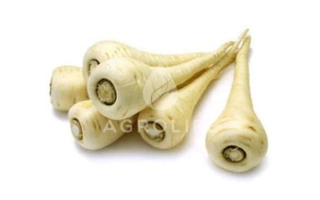

SKU #31075
·
67 views
Stimul
Parsnip
User rating
0 votes0% positive reviews
No ratings yet — be the first.
Direction
Recycling, Fresh Market
Maturation Period
150-160 days
Registration year
2009
Prices in stores
from48 €per 1 kg
pack from 0.24 € per 0.5 g
5 offers from 1 store
Store offers · 5 from 1 stores
Prices are updated on loadLoading offers…
Available at: Добродар
Aggregator catalog: prices are collected automatically from store websites, normalized by AI and converted at the current exchange rate. Before ordering, confirm the price and availability on the store's website. This block is not indexed by search engines — the data is loaded after the page opens.
About product

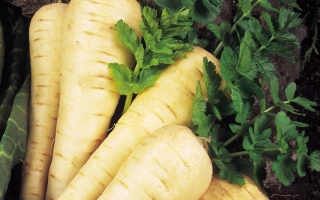
Pasternak variety 'Stimul' is a medium-early vegetable with a period from mass germination to market ripeness of about 155 days. The root has a conical shape with a rounded, flattened base, fully buried in the soil, white in color. The average length of the root is 25 cm with a diameter of 8 cm, and its weight reaches 472 grams. The flesh is dense but tender and juicy, making this variety especial…
Direction
Recycling, Fresh Market
Maturation Period
150-160 days
Registration year
2009
Description
Pasternak variety 'Stimul' is a medium-early vegetable with a period from mass germination to market ripeness of about 155 days. The root has a conical shape with a rounded, flattened base, fully buried in the soil, white in color. The average length of the root is 25 cm with a diameter of 8 cm, and its weight reaches 472 grams. The flesh is dense but tender and juicy, making this variety especially attractive for culinary use. The yield of this variety reaches 2.97 kg per square meter, and the marketability is 95%, confirming the high quality of the product. The variety 'Stimul' has been included in the State Register of Plant Varieties of Ukraine since 2009 and is recommended for cultivation in all regions of the country, including mechanized technologies. The plant is characterized by high cold and frost resistance: seeds germinate at a temperature of 5-6 °C, and mature plants withstand frosts down to -7...-8 °C. Due to the increased content of dry matter, phosphorus, potassium, and fibrous structure of the roots, this variety winters well in the soil with sufficient snow cover or light soil cultivation. Pasternak is light-loving and especially requires light in the early growth stage. It needs uniform soil moisture throughout the entire vegetation period, while excessive moisture and shallow groundwater negatively affect plant development. The variety 'Stimul' is widely used in home cooking and canning. Roots are added to soups, borscht, and side dishes for meat. In addition to culinary use, pasternak has medicinal properties: root decoctions and herb infusions are used for coughs, leaves are used in dermatology, and the plant helps restore strength in convalescents and acts as a vasodilator. Due to its qualities and versatility, pasternak 'Stimul' is a valuable vegetable for both gardeners and health-conscious individuals.
Crop & resistance
Crop
Specifications hover over for a hint about the specification
|
Direction
Direction
Existing varieties and types of cabbage are grown for fresh consumption, long-term storage, and technical processing. |
|
|---|---|
|
Maturation Period
Maturation Period
Vegetation period from emergence to technical maturity 30-50 days. |
150-160 days |
| Registration year | 2009 |
| Catalog | Catalog → Parsnip |
| Legal data |
Show · 1
|
| Country | Ukraine |
Not yet комментариев. Be the first!





See also
Often considered together with this variety






Recently viewed
Products you’ve viewed on this site
Reviews · 0