


SKU #65063
·
44 views
Otrada
Oats
User rating
0 votes0% positive reviews
No ratings yet — be the first.
Ripeness Group (days)
Medium-maturing (95-110)
Yield
60+
Mass of 1000 seeds (g)
32-36, 36-40
Protein (%)
10-11, 11-12, 12-13
About product

Spring oats of the OTRADA variety constitute a mid-ripening fodder crop intended for cultivation in the regions of the Urals, Western Siberia, and the Far East, with a special recommendation for the Tyumen region. The plants are of medium height, ranging from 77.4 to 112.5 cm, featuring a semi-erect bush and strong hairiness on the upper stem node. Leaf sheaths and leaf edges are hairless. The pan…
Ripeness Group (days)
Medium-maturing (95-110)
Yield
60+
Mass of 1000 seeds (g)
32-36, 36-40
Protein (%)
10-11, 11-12, 12-13
Description
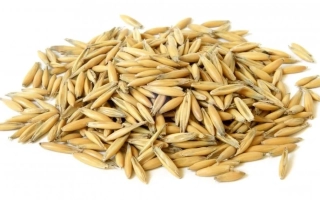
Spring oats of the OTRADA variety constitute a mid-ripening fodder crop intended for cultivation in the regions of the Urals, Western Siberia, and the Far East, with a special recommendation for the Tyumen region. The plants are of medium height, ranging from 77.4 to 112.5 cm, featuring a semi-erect bush and strong hairiness on the upper stem node. Leaf sheaths and leaf edges are hairless. The panicle is semi-unilateral with semi-raised branch positioning, drooping spikelets, and a short glume with a waxy coating of weak or medium intensity. The grain varies from medium to large size, with a 1000-grain mass ranging from 32 to 41 grams. The variety is characterized by medium yield of approximately 30.5 centners per hectare in the permitted region; in the Tyumen region, yield can reach 44.3 c/ha, which is 3.1 c/ha above the Megion standard. The maximum registered yield was 73.1 c/ha in the Tomsk region. The vegetation period ranges from 66 to 85 days, making the variety mid-ripening: it ripens 1-2 days earlier than the Korifei variety and 3-5 days later than the Megion variety. The variety possesses medium drought resistance and moderate resistance to diseases such as powdery scab and crown rust. OTRADA differs with good technological characteristics: grain natural density varies from 460 to 570 g/l, protein content ranges from 8.9-13.5%. Stability to lodging is slightly lower compared to Megion, Korifei, and Kreol varieties, losing 0.5-1 point to them, however, the variety maintains stability and high productivity in the recommended regions. Thanks to its qualities and adaptability, spring oats OTRADA is a reliable choice for fodder production in the conditions of the Urals and Western Siberia.
Crop & resistance
Crop
Disease resistance
Specifications hover over for a hint about the specification
| Ripeness Group (days) | Medium-maturing (95-110) |
|---|---|
|
Yield
Yield
Overall bulb harvest per unit area. Depends on both onion variety characteristics and agronomic practices, fertilizers, and irrigation. Under optimal growing conditions, an onion yield of 100 tons per hectare and above is not considered record-breaking. |
60+ |
| Mass of 1000 seeds (g) | 32-36, 36-40 |
| Protein (%) | 10-11, 11-12, 12-13 |
| Plant Height | 90-100, 100-110 |
| Grain-oriented | |
| Usage Type | |
| Registration year | 2013 |
| Catalog | Catalog → Oats |
| Legal data |
Show · 8
|
| Country | Russia |
Store offers
Prices are updated on loadLoading offers…
Aggregator catalog: prices are collected automatically from store websites, normalized by AI and converted at the current exchange rate. Before ordering, confirm the price and availability on the store's website. This block is not indexed by search engines — the data is loaded after the page opens.
Not yet комментариев. Be the first!


ARGAMAK
ФГБНУ Федеральный Аграрный Научный Центр Северо-востока имени Н.В. Рудницкого
043 1 offer
0.07 €per 1 kg ≈ 4 ₴




See also
Often considered together with this variety




Recently viewed
Products you’ve viewed on this site
Reviews · 0