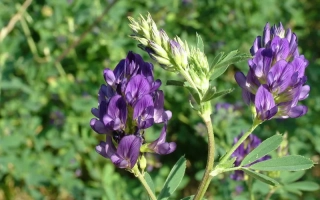
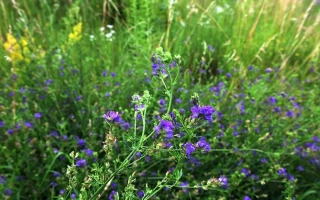
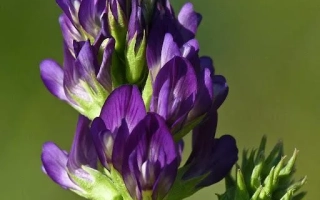
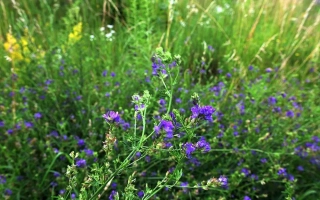
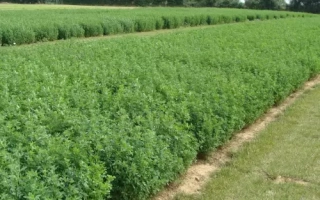
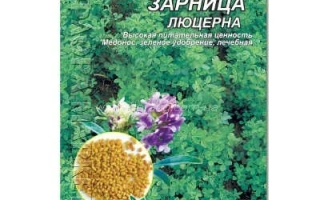
Lucerne variety Plato is a high-yielding forage crop with a vertical growth form and blue-purple flowers. This variety is distinguished by high yields of both green and dry matter, making it particularly valuable for producing high-quality feeds with protein content up to 20%. Thanks to its deep-rooting system, lucerne Plato not only ensures high yields but also serves as an excellent preceding crop, enriching the soil with nitrogen and improving conditions for subsequent plantings. Additionally, the plant is used for land reclamation, broadening its applications.
A distinctive feature of lucerne Plato is its resistance to leaf wilting, clover disease, and lodging, which facilitates harvest and increases cultivation reliability. Under favorable conditions, the variety can yield 4 to 6 cuttings per year, with potential dry hay yields ranging from 400 to 800 kg per hectare over 2-3 cuttings, and up to 1200-2000 kg per hectare over 4-6 cuttings. This makes lucerne Plato one of the most productive and resilient forage crops.
A unique technological feature of this variety is the use of biotechnological seed treatment: seeds are inoculated with Rhizo rhizobial bacteria strains and coated with a nutrient-rich Mantelsaat layer. These bacteria replace mineral nitrogen fertilizers, remain viable within the seeds, and immediately colonize the root of the sprout, providing long-term plant support. Moreover, the bacteria are reliably protected from ultraviolet radiation and extreme temperatures, enhancing germination and plant resilience. Seeds are sown from March to May at a depth of 1-2 cm with a seeding rate of 250-300 g per 100 m².