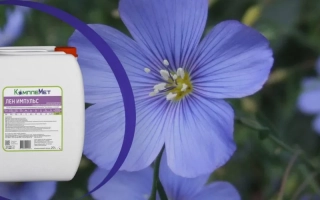
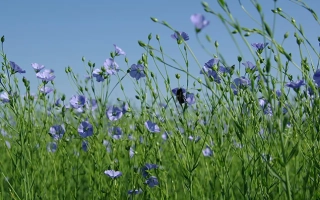
The DOBRYNYA flax-linum variety is an early-maturing cultivar intended for the production of flax fiber. The plant is characterized by a medium stem length of about 98 cm and blue-violet petal coloration at the bud stage, which turns blue upon full development. The seeds are brown in color; the 1000-seed weight ranges from 4.9 to 5.2 grams. The sowing rate is 18-20 million seeds per hectare. Flowering begins at a medium time, and the maturation period varies from 68 to 80 days, allowing the variety to be used in various regions with different climatic conditions. DOBRYNYA is distinguished by high yield and adaptability. In the Northwestern region, the average flax straw yield reaches 43.7 centners per hectare, while in the Volga-Vyatka region, it is 56.2 centners per hectare. In the Perm region, the yield can reach 61.2 centners per hectare. Fiber content in the plant varies from 24.3% to 32.5%, and the long fiber yield ranges from 14.2% to 26.8%. The relative breaking load of the fiber is within the range of 13.7-16.0 dN, indicating high-quality raw materials for the textile industry. The variety exhibits high resistance to major flax diseases, including rust (100%), fusarium wilt (96%), and anthracnose (85%). Additionally, the plant is resistant to lodging and shedding, which contributes to crop preservation and improved commercial qualities. It is recommended for intensive cultivation technologies with the application of nitrogen fertilizers at a rate of 25–50 kg per hectare of active substance. Due to its characteristics and resistance, the DOBRYNYA variety is a reliable choice for producing high-quality flax fiber in various regions.