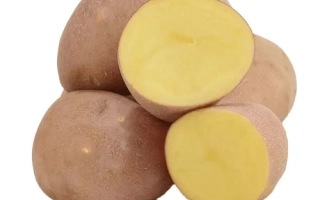
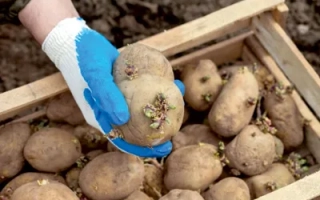
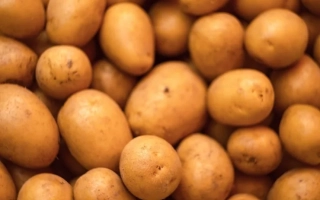
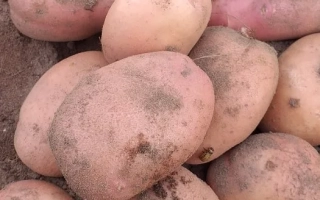
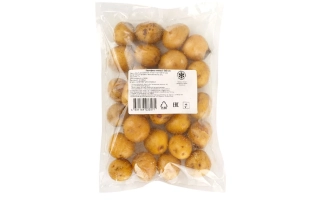
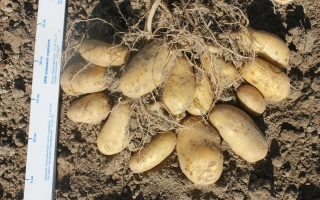
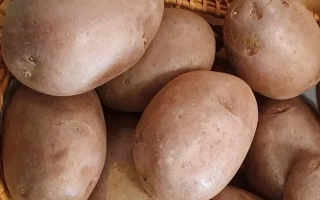
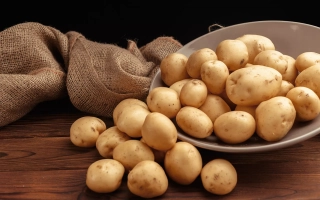
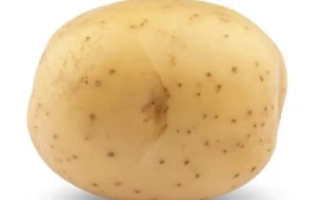
Lila Potato — a medium-early table variety of German selection, characterized by high yield and excellent taste qualities. The vegetation period is 80-90 days, allowing cultivation in various climatic conditions and on different soil types. Plants have medium or high height with green leaves, and each plant forms a large number of uniform tubers weighing 50 to 167 grams, oval or round-oval in shape. Tubers are covered with a dense yellow skin with a net-like structure and have shallow eyes, which facilitates peeling.
The flesh of Lila potato is yellow, uniform, and has an excellent taste with moderate sugar content. The culinary type B/C makes this variety versatile for various cooking methods: frying, boiling, baking, and making mashed potatoes. When boiled, tubers do not darken and become fluffy, enhancing their appeal for home use and commercial production. Starch content is 12-13%, ensuring good texture and flavor of the finished dish.
The variety is distinguished by high resistance to major potato diseases, such as late blight, scab, alternaria, rust, rhizoctonia, silver scab, and also to potato cancer and nematodes. It can withstand frost down to 0 °C, increasing its reliability in cultivation across different regions. Tubers have a storage capacity of 93%, allowing long-term storage without quality loss. To obtain large tubers, it is recommended to maintain optimal spacing at planting, as one plant can produce up to 15-30 tubers. Lila potato is suitable for both household use and farm operations, valued for its high marketability and stable yield.