

SKU #72735
·
54 views
Lazar
Hyssop
User rating
0 votes0% positive reviews
No ratings yet — be the first.
Herbs
Hyssop
Flower Color
Blue, White
Flavor and Aroma
Spicy
Registration year
2020
About product

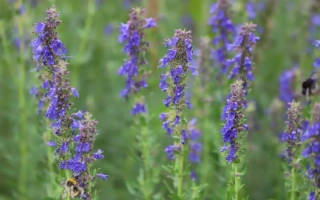
Hyssop (Hissopus officinalis L.) – a perennial herbaceous plant of the mint family, up to 50 cm tall. Its branched stem is covered with lanceolate leaves, and its inflorescences may be dark blue, reddish, or white. Flowering begins in July and continues until September, while the plants emit a spicy aroma that attracts bees.The medicinal properties of hyssop are confirmed by its use in folk medici…
Herbs
Hyssop
Flower Color
Blue, White
Flavor and Aroma
Spicy
Registration year
2020
Description
Hyssop (Hissopus officinalis L.) – a perennial herbaceous plant of the mint family, up to 50 cm tall. Its branched stem is covered with lanceolate leaves, and its inflorescences may be dark blue, reddish, or white. Flowering begins in July and continues until September, while the plants emit a spicy aroma that attracts bees.
The medicinal properties of hyssop are confirmed by its use in folk medicine: it helps with asthma, sore throats, bronchitis, colds, stomatitis, and other respiratory diseases. However, pregnant women, children under two years of age, as well as individuals with epilepsy or hypertension should avoid using it.
In cooking, hyssop is valued as a spice due to the bitter-spicy taste of fresh and dried leaves. It is added to salads, soups, meat and vegetable dishes. Additionally, essential oil (up to 1.15%) with a camphoraceous scent is obtained from the plant, which is used in perfumery and liquor production. In apiaries, hyssop is a valuable honey plant: honey from it is considered one of the best varieties.
The medicinal properties of hyssop are confirmed by its use in folk medicine: it helps with asthma, sore throats, bronchitis, colds, stomatitis, and other respiratory diseases. However, pregnant women, children under two years of age, as well as individuals with epilepsy or hypertension should avoid using it.
In cooking, hyssop is valued as a spice due to the bitter-spicy taste of fresh and dried leaves. It is added to salads, soups, meat and vegetable dishes. Additionally, essential oil (up to 1.15%) with a camphoraceous scent is obtained from the plant, which is used in perfumery and liquor production. In apiaries, hyssop is a valuable honey plant: honey from it is considered one of the best varieties.
Crop & resistance
Crop
Specifications
| Herbs | |
|---|---|
| Flower Color | |
| Flavor and Aroma | |
| Registration year | 2020 |
| Catalog | Catalog → Hyssop |
| Legal data |
Show · 1
|
| Country | Russia |
Store offers
Prices are updated on loadLoading offers…
Aggregator catalog: prices are collected automatically from store websites, normalized by AI and converted at the current exchange rate. Before ordering, confirm the price and availability on the store's website. This block is not indexed by search engines — the data is loaded after the page opens.
Not yet комментариев. Be the first!


See also
Often considered together with this variety


Healer
Сельскохозяйственное Селекционно-производственное Предприятие Сортсемовощ
060 1 offer
1 040 €per 1 kg ≈ 53 574 ₴




Recently viewed
Products you’ve viewed on this site
Reviews · 0