


SKU #72727
·
74 views
Nakhodka
Guar
User rating
0 votes0% positive reviews
No ratings yet — be the first.
Assignment
Cigar Tobacco
Vegetation Period
80-100
Protein content, %
32-38
Registration year
2019
About product

A stable protein harvest with high resistance to common legume diseases.
Assignment
Cigar Tobacco
Vegetation Period
80-100
Protein content, %
32-38
Registration year
2019
Description
Practical insights on cultivating 'Nakhodka' guar
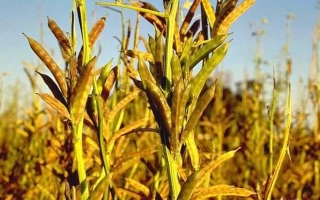
When planning the sowing season, the primary concern is always result predictability. The 'Nakhodka' variety, developed by the Vavilov Research Institute and the Volgograd Botanical Garden, acts as a reliable workhorse. It is not a finicky crop that requires daily monitoring, but a robust material focused on producing a stable feed base with high protein content.
Operational Performance
- Vegetation cycle: It matures within 80-100 days. For our operational schedule, this means a calm harvest season without the risk of being caught by critical autumn precipitation.
- Protein density: With a protein content of 32-38%, 'Nakhodka' serves as an excellent component for livestock rations, allowing us to significantly reduce costs on expensive protein additives.
- Biological resilience: Breeders focused heavily on survival. Its natural resistance to root rot, aschocitoza, and bacteriosis eliminates the need to douse fields with fungicides at every growth stage.
Throughout the cultivation process, the variety has proven to be highly compatible with standard agricultural machinery. It does not require specific modifications to combines or planters. The 'maintainability' of these crops lies in their high recovery capacity after short-term weather stress, a hallmark of domestic selection adapted to harsh conditions.
Maintenance is reduced to a standard agronomic minimum. Thanks to its immunity to common legume diseases, we spend fewer resources on preventive chemical treatments, which directly improves the cost-efficiency per ton of final feed produced.
Crop & resistance
Disease resistance
Specifications
| Assignment | |
|---|---|
| Vegetation Period | 80-100 |
| Protein content, % | 32-38 |
| Registration year | 2019 |
| Catalog | Catalog → Guar |
| Legal data |
Show · 6
|
| Country | Russia |
Store offers
Prices are updated on loadLoading offers…
Aggregator catalog: prices are collected automatically from store websites, normalized by AI and converted at the current exchange rate. Before ordering, confirm the price and availability on the store's website. This block is not indexed by search engines — the data is loaded after the page opens.
Not yet комментариев. Be the first!




See also
Often considered together with this variety





Recently viewed
Products you’ve viewed on this site
Reviews · 0