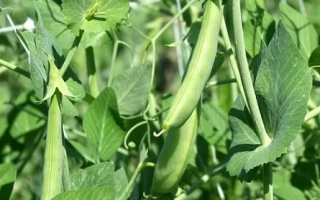
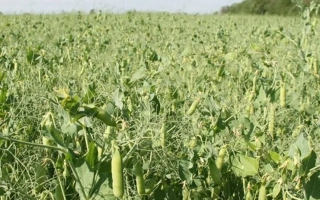
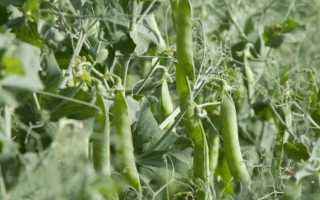
Talovets 70 is a mid-season pea variety characterized by a vegetation period ranging from 68 to 87 days. Plants reach heights of 55 to 105 cm, featuring an ordinary stem of medium length and a leafless structure. Inflorescences consist of two- or three-flowered racemes with large white flowers. Pods are straight or slightly curved, with blunt tips and a developed parchment layer, containing 4 to 8 round seeds with a smooth surface and yellow cotyledons. The mass of 1000 seeds varies from 201 to 271 grams. The variety is noted for high resistance to lodging, enabling efficient use of direct combine harvesting during crop collection. Drought resistance and shatter resistance are comparable to standard varieties. However, Talovets 70 is susceptible to root rots and ascochytosis, and is prone to damage from codling moths and grain weevils, particularly in southern regions. Despite this, the variety demonstrates high adaptability to various natural conditions and is capable of providing stable yields. The average yield of the variety in the Volga-Vyatka region is about 24.3 centners per hectare, exceeding the indicators of standard varieties. In the Nizhny Novgorod region, yield reaches 34.3 centners per hectare, while the maximum productivity potential can reach 62 centners per hectare. Protein content in the grain varies from 21.8% to 25.4%, making Talovets 70 attractive for commercial cultivation. High technological ease of cultivation and the economic efficiency of the variety ensure its competitiveness in various natural and climatic zones of Russia.