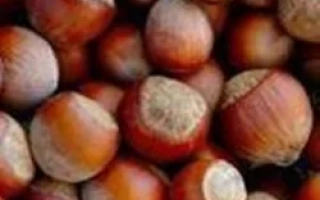
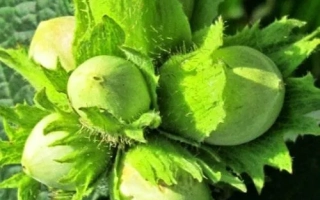
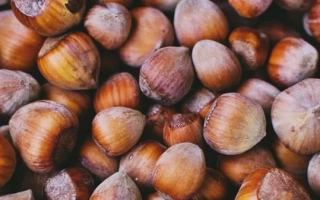
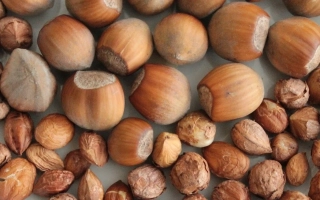
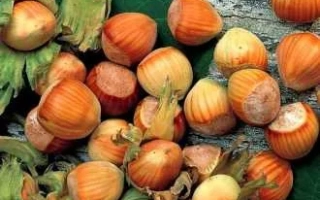
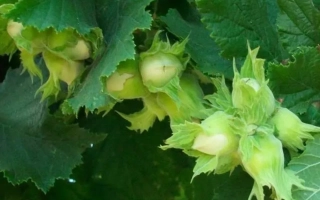
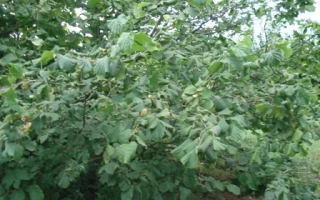
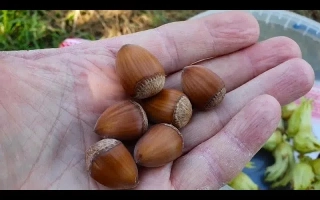
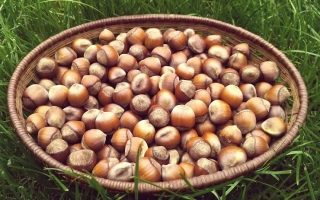
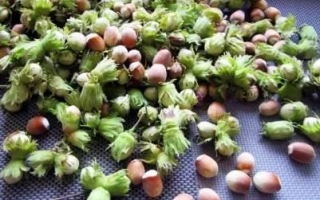
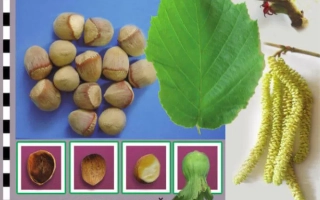
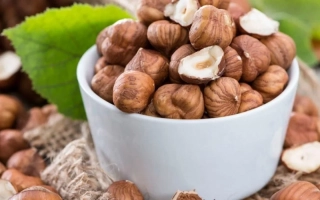
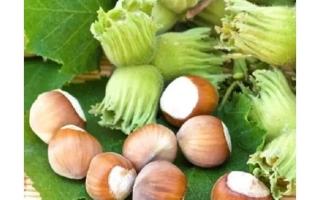
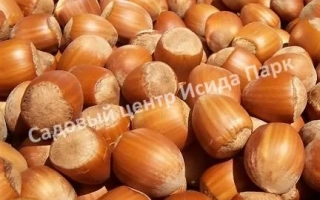
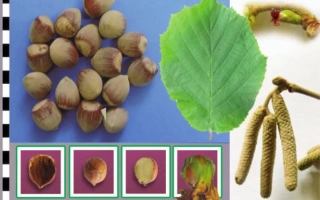
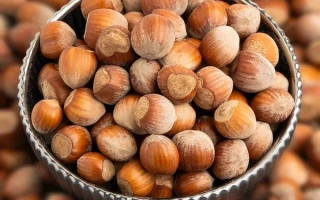
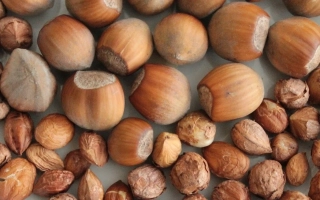
European hazelnut variety Cosford — a vigorous shrub with a tall, dense crown, reaching up to 2-3 meters in height. The plant is sun-loving, with moderate requirements for moisture and soil, exhibits good cold resistance, and is suitable for cultivation in areas with a warm microclimate. The leaves of Cosford are large, dark green, oval-shaped, and turn reddish in autumn. Numerous, brown, flexible, and long catkins. This variety was developed in England in 1816 and is distinguished by early fruiting, making it attractive to gardeners. The nuts of the Cosford variety are large, elongated, with thin yellow-brown shells that turn reddish-brown as they ripen. The nuts have gently rounded ends and easily detach from the fruit husk, which is slightly longer than the nut and tightly adheres at the base. The nut kernel is bright cream-colored, juicy, and very tasty, moderately filling the shell. Nut ripening begins in September. Due to its self-pollinating ability and high fruiting capacity, Cosford is an excellent pollinator for many other hazelnut varieties. Cosford hazelnuts are valued not only for their tasty and nutritious fruits, but also for their beneficial properties and versatility of use. Hazelnut kernels are rich in calories and beneficial substances, making them an important component of dietary nutrition for both children and adults. Hazelnut oil, obtained from the nuts, is of high quality and widely used in cosmetology and folk medicine. In addition, hazel wood is used for charcoal production, and thin branches are used for basket weaving and artistic drawing. Thanks to its well-developed root system, this shrub effectively stabilizes soil and prevents erosion, making it a valuable plant for gardens and landscape design.