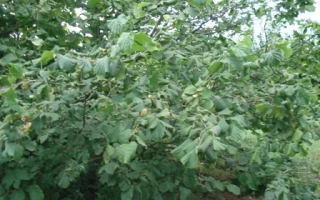
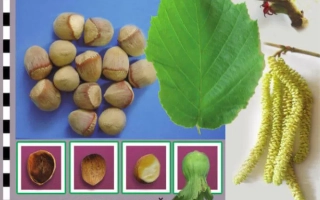
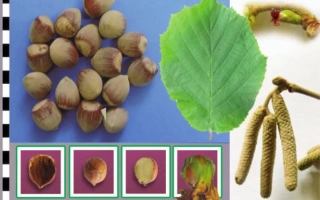
The Ennis hazelnut variety was developed in the state of Washington in 1940 and introduced into production in the state of Oregon as a replacement for the Barcelona variety. Plants of this variety have medium height, similar to the Butler variety, and when grown in tree form, they form a slender, spherical crown. Flowering occurs a few days after Butler, but the pollen of this variety is poorly viable, so Ennis is not suitable as a pollinator. For successful pollination, varieties Eta, Theta, Butler, or Chudov Ballwiller are recommended.
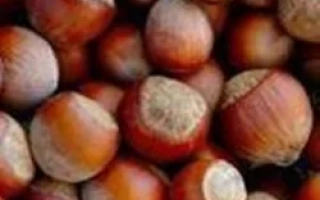
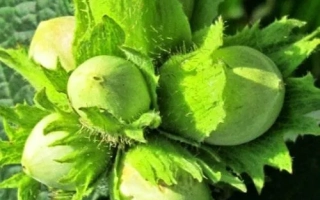
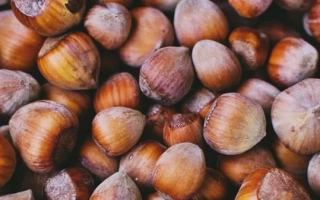
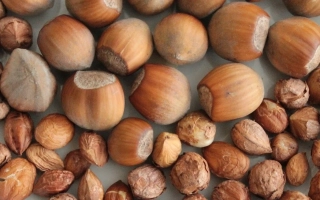
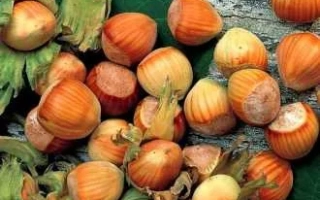
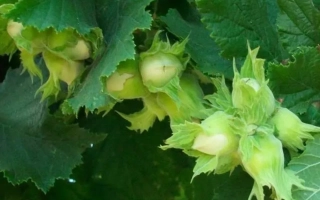
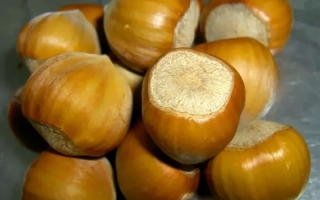
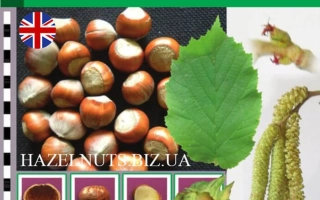
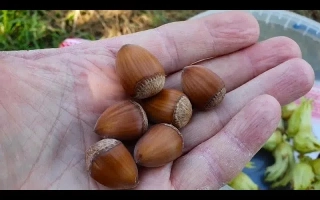
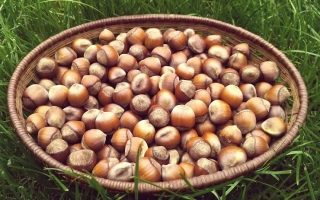
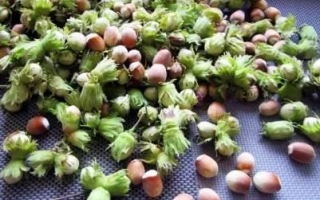
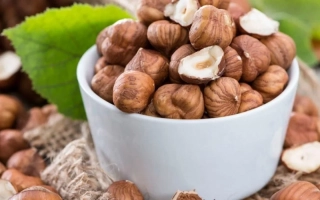
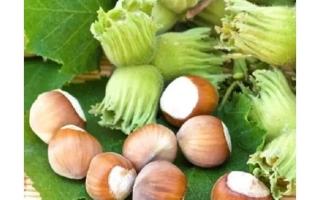
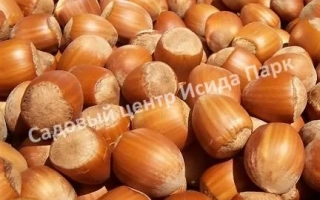
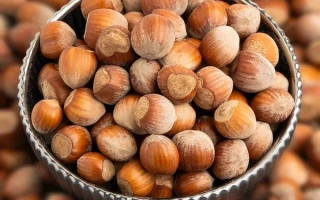
The hazelnuts of the Ennis variety are large, spherical-oval, with a smooth surface and dark stripes on a bright brown-orange background, giving them an attractive appearance. They usually form in clusters of 2-3 nuts or grow individually. The shell cracks easily, and the kernels are typically free of fibers and do not blanch. The nuts ripen in the first or second decade of September. When grown on quality soils and under good sunlight, the kernels are well-filled; however, under less favorable conditions, shriveled or empty nuts may occur. The kernel content in the nut is approximately 46-48%, although these figures may vary depending on drying conditions.
The Ennis variety is characterized by high cold tolerance and produces well under various climatic conditions, including in Poland, where no frost damage has been observed in the last ten years. However, it requires careful protection against diseases, especially moniliosis, to which the variety is susceptible. Due to its characteristics and attractive appearance of the nuts, Ennis is a popular choice for cultivation in both commercial orchards and private gardens.