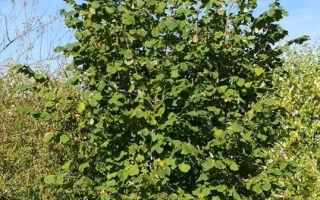
Shedevr walnut is a valuable Ukrainian early-mid-season variety developed at the Kharkiv Research Institute of Agroforestry under the leadership of F.A. Pavlenko. The trees of this variety are vigorous, reaching up to 4 meters in height and a crown diameter of about 4-4.5 meters, with a pyramidal shape and wide, spreading crown. Plants are not prone to overcrowding, which simplifies care and promotes good air circulation. The variety is characterized by high winter hardiness, resistance to frost, drought, and pests, making it suitable for cultivation in the steppe and forest-steppe zones of Ukraine.
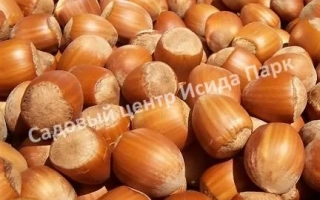
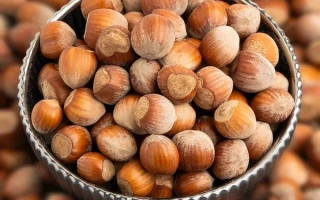
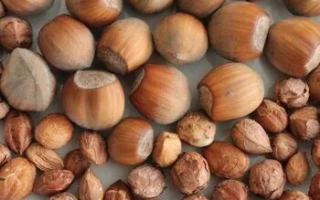
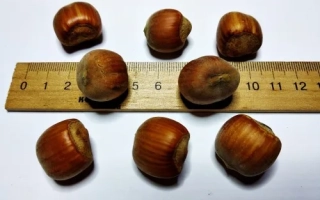
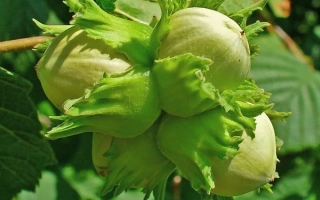
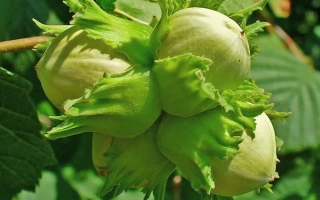
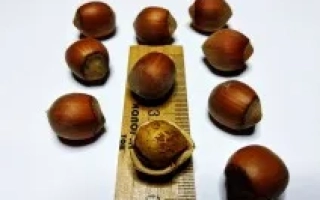
The fruits of the Shedevr variety are large, dark-brown in color with a glossy, medium-thickness shell that cracks easily. The nut mass ranges from 2.7 to 3.5 grams, with the kernel accounting for about 47% of the fruit's mass and weighing 1.6-1.8 grams. The kernel is dense, sweet, with excellent flavor, and easily separates from the membrane when punctured. The oil content in the kernel reaches 65%, and protein content — 17%, which is above average. Yield at ages 7-10 years ranges from 5 to 8 kg of dry nuts per tree.
Shedevr walnut begins to bear fruit as early as the 2nd-3rd year after planting vegetative saplings. For effective pollination and maximum yield, it is recommended to plant no fewer than three saplings of different varieties with overlapping flowering periods, as walnut is cross-pollinating. Recommended pollinators include the varieties Lesnaya, Chechensky, Dolinetsky, and Rakety. Due to its high yield, excellent fruit quality, and resistance to adverse conditions, the Shedevr variety is an excellent choice for both industrial and private cultivation.