
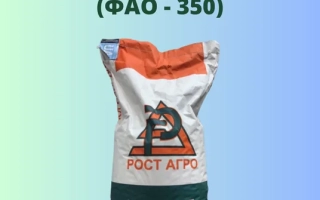


SKU #34349
·
49 views
Maize AS 33041
Corn
Aspria Seeds SAUser rating
0 votes0% positive reviews
No ratings yet — be the first.
FAO
90–1240
Ripening
120-140 days
Hybrid Type
Simple Hybrid
Kernel Type
Dent
About product

A versatile hybrid for grain and silage, offering high adaptability and consistent yields.
FAO
90–1240
Ripening
120-140 days
Hybrid Type
Simple Hybrid
Kernel Type
Dent
Description
The Versatile Potential of Aspria Seeds AC 33041
Selecting a corn hybrid is always about balancing grain yield with silage quality. AC 33041 from Aspria Seeds, developed by originator Frederic Poujeaud, occupies a niche of flexible hybrids capable of adapting to diverse climatic zones. Its core strength lies in its dent grain type, which ensures excellent moisture release during maturation—a critical factor for reducing drying costs.
Agronomic Highlights
This simple hybrid demonstrates stability across a broad FAO range (90–1240), making it a well-considered choice for operations requiring a flexible harvest schedule. A maturation period of 120–140 days places it in the mid-season group, which maximizes daylight utilization for robust cob development.
- Dual-Purpose Utility: You can confidently use AC 33041 for both grain and silage. This is an ideal solution for livestock operations with integrated crop production, where high-starch biomass volume is essential.
- Seeding Density Flexibility: Planting density recommendations range from 40,000–45,000 seeds/ha in moisture-limited zones to 55,000–60,000 seeds/ha in fertile, well-irrigated soils. This allows farmers to adjust plant load according to the specific potential of their fields.
Why Choose AC 33041?
The key strengths of this hybrid are predictability and reliability. Unlike highly specialized lines, AC 33041 is forgiving of common agronomic errors, delivering decent yields even under stress. If your farm prioritizes risk mitigation and the versatility of machinery and storage use, this Aspria Seeds hybrid is an optimal tool. However, it is worth noting that to achieve the full grain potential, timely harvesting is crucial, as the dent grain type requires proper completion of the vegetative cycle.
Crop & resistance
Crop
Specifications hover over for a hint about the specification
|
FAO
FAO
Corn hybrids are classified by maturity groups and by the FAO number. All corn hybrids are distributed according to the FAO scale. Under Central European conditions, a difference of 10 FAO units between hybrids results in a 1-2 day difference in their maturity. The higher the FAO... |
90–1240 |
|---|---|
| Ripening | 120-140 days |
| Hybrid Type | |
|
Kernel Type
Kernel Type
Dent corn (Zea mays indentata) — Large, elongated, flat kernels. The endosperm is horny on the sides of the kernel, mealy in the center and at the top. A depression forms at the top of the kernel upon ripening. Dent corn is the most widely cultivated group among others. Plants ty... |
|
|
Use Direction
Use Direction
Dual-purpose hybrids: for silage and grain in all growing regions. These are "stay-green" type hybrids, meaning the plants remain green for a longer period. However, this does not affect the sugar, cellulose, and hemicellulose content, nor the degree of lignification of the plant... |
|
|
Recommended Density
Recommended Density
Optimal productivity is achieved at a planting density of 4000-5500 plants/ha. Possible planting scheme: 300-500x40-80 cm. |
40-45 thousand pcs/ha, 55-60 thousand pcs/ha |
| Registration year | 2016 |
| Catalog | Catalog → Corn |
| Manufacturer | Aspria Seeds SA |
| Legal data |
Show · 1
|
Store offers
Prices are updated on loadLoading offers…
Aggregator catalog: prices are collected automatically from store websites, normalized by AI and converted at the current exchange rate. Before ordering, confirm the price and availability on the store's website. This block is not indexed by search engines — the data is loaded after the page opens.
Not yet комментариев. Be the first!
Alternatives
Maize seeds · similar varieties






See also
Often considered together with this variety







Recently viewed
Products you’ve viewed on this site
Reviews · 0