
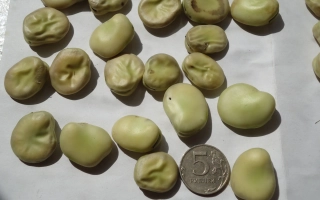


SKU #48616
·
65 views
Horostkovsky
Beans
User rating
0 votes0% positive reviews
No ratings yet — be the first.
Assignment
Feed, Food
Soil Requirements
Loamy
Growing Conditions
Open Ground
Registration year
1962
About product

A resilient domestic variety known for its strong resistance to fungal pathogens and versatility in both feed and food production.
Assignment
Feed, Food
Soil Requirements
Loamy
Growing Conditions
Open Ground
Registration year
1962
Description
Proven Genetics for Sustainable Production
The 'Khorostkivski' broad bean variety, developed by the Ternopil Institute of Agro-Industrial Production of the NAAS of Ukraine, represents a stable and reliable solution for field crop rotation. Designed specifically for outdoor cultivation, this variety has established a reputation for its robust performance, particularly in loamy soils where it excels in moisture retention and nutrient uptake.
Resilience and Phytosanitary Profile
In the contemporary agricultural market, 'Khorostkivski' is valued for its inherent resistance to the most common fungal diseases that often jeopardize legume yields. Its genetic profile offers significant protection against:
- Anthracnose: Preventing early-stage lesions and reducing yield loss.
- Ascochyta blight: Limiting the spread of the pathogen in humid conditions.
- Root rots: Strengthening the plant's viability during critical establishment phases.
By leveraging the strong natural immunity of this variety, producers can optimize their fungicide application schedules, making the crop more economically efficient. Whether the harvest is intended for high-protein animal feed or the food processing sector, 'Khorostkivski' delivers consistent quality and yield potential, making it a cornerstone for those focusing on quality bean production.
Crop & resistance
Disease resistance
Specifications
| Assignment | |
|---|---|
| Soil Requirements | |
| Growing Conditions | |
| Registration year | 1962 |
| Catalog | Catalog → Beans |
| Legal data |
Show · 1
|
| Country | Ukraine |
Store offers
Prices are updated on loadLoading offers…
Aggregator catalog: prices are collected automatically from store websites, normalized by AI and converted at the current exchange rate. Before ordering, confirm the price and availability on the store's website. This block is not indexed by search engines — the data is loaded after the page opens.
Not yet комментариев. Be the first!





See also
Often considered together with this variety






Recently viewed
Products you’ve viewed on this site
Reviews · 0