Autumn variety of folk selection. Selected by Mikhailova in 1905 in the city of Minusinsk among seedlings from open pollination of the Pudovshina variety, apparently Siberian apple. It was widely spread in the gardens of Siberian residents. It was regionally approved since 1947 for the East Siberian region. Absent in new orchards. Used as a winter-hardy framework-forming variety.
Trees are medium-sized with sparse crowns, with many multi-year branching knobs and spear-like shoots on first and second order branches, on which most of the fruit is formed.
Shoots are weakly hairy at the tips. Leaves are dark green, large, broadly oval, with a rounded base, long and wide apex, finely toothed and serrated margins, slightly spirally twisted, with a hanging tip, smooth, without hair. Petioles of medium length, hairy, with large, broad stipules.
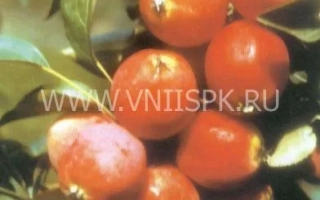
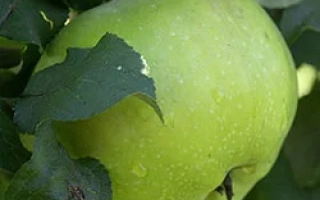
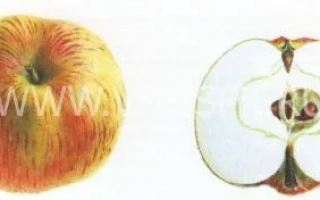
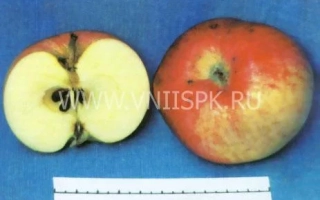
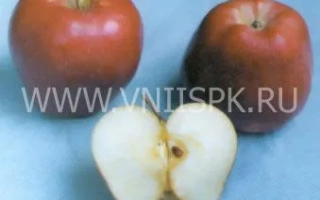
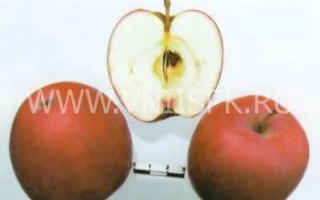
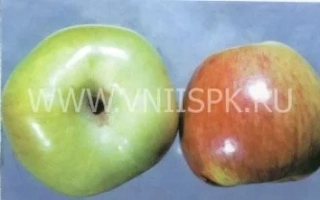
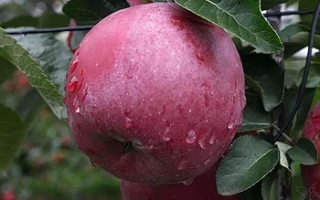
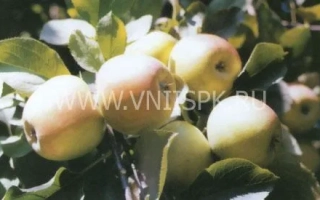
Fruits are exceptionally small (8-10 g), round, ribbed. Main color is yellow, covering color is dark red, blurred, solid. Fruit stalk is long, often with a swelling at the base. Calyx is small. Receptacle falls off, small, finely ribbed. Subreceptacle tube is small, conical, sometimes with remnants of hairy stigma.
Flesh is creamy, dense, tart-sweet, astringent, of unsatisfactory taste. Chemical composition of fruits: total sugars — 12.6% (10.1-14.5), titratable acids — 1.58% (1.02-2.02), tannins — 800 mg/100g (415-1197), ascorbic acid — 13.3 mg/100g (6.7-26.0), P-active compounds — 800 mg/100g (415-1060).
Harvesting maturity — in the first decade of September, storage life up to 60 days. Variety for technical use.
Begins fruiting in the third to fourth year. High yield, irregular. High winter hardiness and drought resistance. Sensitive to scab.
Advantages of the variety: high winter hardiness and drought resistance.
Disadvantages of the variety: exceptionally small fruits of unsatisfactory taste, sensitive to scab.