


SKU #3339
·
469 views
Daughter of Pepinchik
Apple
User rating
0 votes0% positive reviews
No ratings yet — be the first.
Type of Sort
Autumn Apple Variety
Store offers · 1 from 1 stores
Prices are updated on loadLoading offers…
Available at: Питомник Савватеевых · Садовая Деревня
Aggregator catalog: prices are collected automatically from store websites, normalized by AI and converted at the current exchange rate. Before ordering, confirm the price and availability on the store's website. This block is not indexed by search engines — the data is loaded after the page opens.
About product

Autumn variety developed at the Krasnoyarsk Fruit Breeding Experimental Station by N. N. Tikhonov, A. S. Tolmacheva, G. A. Krekotina through pollination of Pepinchik Krasnoyarsk with a pollen mixture (Nurtured + Friend + Lantern + Yellow Blush + Tungus). Passed State Testing. Cultivated in the Sverdlovsk Oblast as a technical variety, where fruits are 2 times larger. The most winter-hardy variet…
Type of Sort
Autumn Apple Variety
Description
Autumn variety developed at the Krasnoyarsk Fruit Breeding Experimental Station by N. N. Tikhonov, A. S. Tolmacheva, G. A. Krekotina through pollination of Pepinchik Krasnoyarsk with a pollen mixture (Nurtured + Friend + Lantern + Yellow Blush + Tungus). Passed State Testing.
Cultivated in the Sverdlovsk Oblast as a technical variety, where fruits are 2 times larger. The most winter-hardy variety among high-quality, small-fruited semi-cultivars, therefore primarily intended for harsher areas of Western and Eastern Siberia.
Tree — semi-dwarf, with a round, moderately dense crown. Bears fruit on simple and complex ring nodes and spurs.
Shoots are usually thin, slightly curved, round in cross-section, brownish-brown. Leaves are medium-sized, round, slightly pointed at the apex, with finely serrated edges, green. Petioles are medium-sized, thin, hairy. Stipules are medium-sized, semilunar.
Flowers are medium-sized, small-cup-shaped, creamy. Stigmas are located significantly higher than anthers.
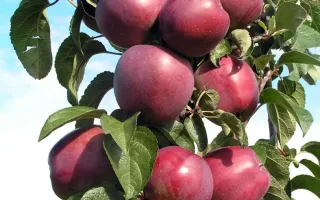
Fruits (see illustration) are small, one-dimensional, round with narrow ridges and a seam. Surface is smooth. Main color is light yellow, covering color is striped, interrupted, brick-red across the entire fruit. Covering color becomes more intense during storage. Peduncle varies in length, from 5 to 15 mm, with bumps. Calyx is medium-sized, rust-free, and the calyx tube is usually closed, in a narrow shallow groove. Sub-calyx tube is medium-sized, cup-shaped. Axial cavity does not connect with the chamber.
Flesh is creamy, with red veins, dense, fine-grained, juicy. Taste is sour-sweet, with spice and moderate aroma, rated 4.2 points. Chemical composition of fruits: dry matter — 20.3%, total sugars — 8.8%, titratable acids — 1.38%, ascorbic acid — 22.0 mg/100g. Fruits ripen in autumn and can be stored until December-January.
Fruits are suitable for fresh consumption, compotes, juices, and puree.
Pollinators: Alenushka, Lantern, Friend, Youth, Zhivinka.
Fruit production begins in the 4th year of life. 10-year-old trees yielded 270 centners per hectare.
The variety is resistant to scab and drought — to a moderate degree.
Advantages of the variety: semi-dwarf with early good fruiting, high winter hardiness, fruit storage capability, universal consumption until mid-winter, resistance to scab.
Disadvantages of the variety: small fruits.
Crop & resistance
Crop
Disease resistance
Specifications
| Type of Sort | |
|---|---|
| Catalog | Catalog → Apple |
Not yet комментариев. Be the first!
Alternatives
Apple saplings · similar varieties


See also
Often considered together with this variety




Recently viewed
Products you’ve viewed on this site
Reviews · 0