


SKU #3567
·
247 views
Chara (Anniversary)
Apple
User rating
0 votes0% positive reviews
No ratings yet — be the first.
Type of Sort
Summer apple variety
About product

Late-season variety developed at the Novosibirsk Regional Fruit and Berry Experimental Station from pollination of the 'Ranetka' variety. It is resistant to autumn large-fruited varieties pollen mix. Authors: A. A. Christo, R. A. Bykova, N. E. Yuryeva. The variety is included in the State Register for the West Siberian Fruit Growing Zone, found in commercial orchards of Novosibirsk and Kemerovsk…
Type of Sort
Summer apple variety
Description
Late-season variety developed at the Novosibirsk Regional Fruit and Berry Experimental Station from pollination of the 'Ranetka' variety. It is resistant to autumn large-fruited varieties pollen mix. Authors: A. A. Christo, R. A. Bykova, N. E. Yuryeva. The variety is included in the State Register for the West Siberian Fruit Growing Zone, found in commercial orchards of Novosibirsk and Kemerovsk regions; among hobby gardeners in Western and Eastern Siberia.
Medium-sized tree, with a spherical dense crown, which becomes broadly oval over time. Main branches and trunk with smooth greenish-brown bark. Mixed fruiting — the main yield is concentrated on one-year growths and young buds.
Shoots are straight, medium-sized, dark brown with small, surface-level tubercles. Buds are pressed, greenish-brown. Leaves are large, leathery, green, smooth, non-hairy, ovate-elliptical with slightly upward-curled margins. Petiole is short, medium thickness, positioned on the shoot at a 45° angle. Stipules are small, narrowly lance-shaped.
Flowers are medium-sized, white-pink with elongated whole petals, stigmas raised above the stamens.
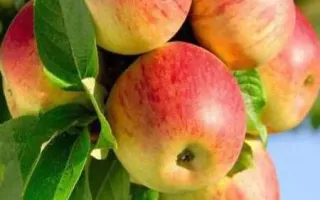
Fruits are very small, average fruit weight 14 g, maximum 34 g, flattened-round shape, very weak ribbing. Skin is smooth, glossy, medium thickness, with yellow base color and a dense bright red blush covering most of the fruit. Calyx is medium-depth, no plate. Receptacle is non-falling, closed, surrounded by small pearls. Pedicel is thin, length varies from short to long depending on position.
Flesh is creamy, juicy, sweet-tart, medium density. Seeds are light brown, medium size. Chemical composition of fruits: sugars — 14.7% (10.9–15.4), titratable acids — 0.78% (0.55–0.81), ascorbic acid — 29.8 mg/100g (18.4–30.2), catechins — 671 mg/100g.
Fruits are transportable, suitable for making juices, purees, compotes.
Late-season ripening fruits. On the tree, fruits crack when overripe due to heavy rain or in dry autumn. Suitable for fresh consumption and processing, stored 60–90 days.
Low self-fertility, requires pollinators, best are 'Fonarik' and 'Red Cluster'.
Highly winter-hardy, less cold-resistant and durable than 'Ranetka Purple', slightly higher than 'Fonarik'.
Advantages of the variety: high regular yields, winter hardiness, medium height, excellent raw material for processing.
Disadvantages of the variety: small fruit size, short fruit storage life.
Crop & resistance
Crop
Specifications
| Type of Sort | |
|---|---|
| Catalog | Catalog → Apple |
Store offers
Prices are updated on loadLoading offers…
Aggregator catalog: prices are collected automatically from store websites, normalized by AI and converted at the current exchange rate. Before ordering, confirm the price and availability on the store's website. This block is not indexed by search engines — the data is loaded after the page opens.
Not yet комментариев. Be the first!
Alternatives
Apple saplings · similar varieties




See also
Often considered together with this variety


Recently viewed
Products you’ve viewed on this site
Reviews · 0