
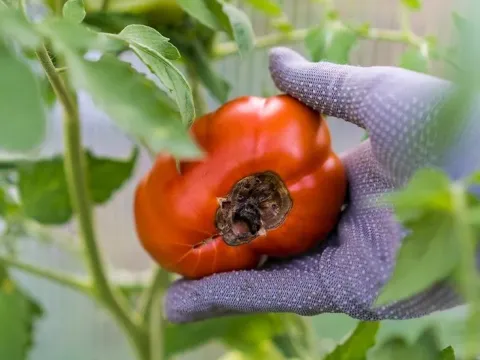
Tomato blossom-end rot
Tomato top
Tomato blossom-end rot is a non-infectious physiological disorder that results from internal metabolic disturbances within the tomato plant tissues.
What the section contains
Tomato blossom-end rot
The condition is primarily driven by a localized calcium deficiency, which occurs in the fruit during the critical stages of rapid cell division and expansion.
As this is not caused by bacteria, fungi, or viruses, it is not a contagious disease that can spread through the air or direct plant-to-plant contact.
The disorder is essentially a failure of the plant's vascular system to transport enough calcium to the developing distal end of the fruit.
Environmental stress factors often exacerbate the plant's inability to uptake and distribute calcium, leading to tissue necrosis at the blossom end.
Symptoms typically appear at the blossom end of the fruit as small, water-soaked, light-colored spots that gradually expand in size.
As the disorder progresses, these spots darken, turning brown or black and becoming sunken, leathery, and firm to the touch.
In severe cases, the affected area becomes flattened or concave, often showing a parchment-like or dry surface texture as the tissue dies.
Although the initial injury is physiological, secondary invaders like saprophytic fungi may colonize the dead tissue, causing further decay.
- Water-soaked lesions at the base of the fruit.
- Firm, leathery, and dark-colored patches.
- Premature ripening of the damaged tomato fruits.
Fluctuating soil moisture levels, specifically prolonged drought followed by heavy watering, are the primary triggers for calcium uptake failure.
Rapid plant growth during hot and windy weather increases the transpiration rate, causing water to go to leaves instead of developing fruit.
High soil salinity levels increase osmotic tension, making it difficult for the roots to extract water and essential nutrients from the soil.
Excessive application of nitrogen or potassium fertilizers can lead to nutrient antagonism, significantly reducing the amount of calcium absorbed by the plant.
Mechanical root damage, often caused by deep cultivation or weeding, severely limits the plant's hydraulic capacity and nutrient delivery systems.
Blossom-end rot causes significant yield loss, as the affected fruits are non-marketable and unsuitable for fresh consumption or processing.
The disorder reduces the overall quality of the harvest, forcing growers to discard a large percentage of the yield during the sorting process.
Energy expenditure within the plant is redirected toward managing the physiological stress, which slows down the development of healthy fruits.
It impacts the economic viability of tomato production by decreasing the volume of high-quality produce available for sale during the season.
The loss of fruit on early clusters often results in the loss of the most valuable early-season revenue for commercial producers.
Maintaining a constant and uniform soil moisture level through regular irrigation is the most important preventive measure for any grower.
Foliar application of calcium-based fertilizers, such as calcium nitrate, helps provide necessary nutrients directly to the developing fruit tissues.
Optimizing fertilizer programs to balance nitrogen and potassium levels helps prevent nutrient competition and ensures proper calcium absorption.
Using organic or synthetic mulch helps stabilize soil moisture and temperature, providing a more favorable environment for healthy root activity.
Implementing proper ventilation and shading in greenhouses can significantly reduce the transpiration stress that prevents calcium movement to fruits.