
Potato virus X
Potato virus X
The causal agent is Potato virus X (PVX), a member of the Potexvirus genus. It consists of flexible, filamentous particles that lack a specific insect vector, relying instead on mechanical transmission through physical contact between plants or tools.
What the section contains
Potato virus X
PVX is remarkably stable in the environment and can persist in soil, plant debris, and on farm machinery or worker clothing. This stability makes it one of the most widespread and persistent viral pathogens affecting solanaceous crops globally.
It infects a wide range of plants, including potato, pepper, and tomato. Because it often co-infects with other viruses like PVY or PVS, it frequently contributes to severe yield degradation through complex synergistic interactions within the plant host.
Once introduced into a plant, the virus moves systemically through the phloem. It colonizes all parts of the plant, ensuring that tubers or seeds become infected and continue the cycle of transmission in subsequent growing seasons.
The lack of a biological vector does not reduce its danger, as standard agricultural practices such as cultivation, harvesting, and tuber handling provide constant opportunities for the virus to spread from infected to healthy plant tissues.
Symptoms of Potato virus X vary significantly depending on the virus strain and the host variety. In many instances, the infection remains latent, meaning the plant shows no visible symptoms while acting as a silent reservoir for the virus.
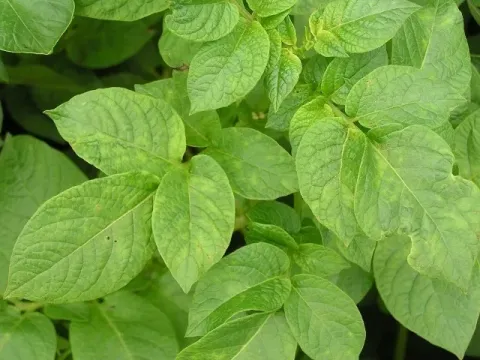
When symptoms appear, they typically present as mild mosaic patterns, characterized by a light and dark green mottled appearance on the leaves. Slight leaf crinkling, waviness, or deformation may also be observed during active vegetative growth.
In more susceptible cultivars or under stressful conditions, necrotic spots may develop on the foliage. Infected plants often exhibit stunted growth and reduced vigor, which becomes increasingly apparent when compared to healthy, uninfected neighboring plants.
On pepper crops, PVX can cause yellowing, leaf puckering, and general growth retardation. Fruit production may be affected, resulting in smaller, lower-quality produce that fails to meet market standards for uniformity or size.
It is crucial to note that symptoms are often exacerbated by the presence of other concurrent viral infections. When PVX is combined with other viruses, the synergistic effect can lead to severe crop decline, chlorosis, and total loss of plant productivity.
High planting density is a major factor promoting the spread of PVX. When foliage is thick and leaves overlap, mechanical transmission of viral particles through contact and micro-abrasions becomes highly efficient throughout the entire field.
Poor sanitation practices during routine field operations, such as pruning, weeding, or harvesting, are primary drivers of infection. Contaminated blades or equipment serve as perfect vehicles for transferring the virus between healthy and sick plants.
The presence of perennial solanaceous weeds creates a persistent inoculum source in the field environment. These weeds harbor the virus between cropping seasons, allowing it to re-emerge and infect new plantings year after year.
Environmental conditions that favor rapid plant development can occasionally mask symptoms, which is deceptive. During these periods, the virus often multiplies rapidly within the plant tissues, leading to a higher viral load in the harvested tubers.
The use of infected seed potatoes is the most common cause of widespread field contamination. Since the virus is tuber-borne, it ensures a permanent infection cycle unless certified, virus-free seed stock is used consistently by the grower.
The primary economic harm of PVX is the insidious reduction in tuber weight and overall yield. Because the virus redirects plant resources toward viral replication, the crop is inherently less efficient at producing biomass and starch.
Infection degrades the quality of seed material, leading to long-term variety degeneration. Over several generations, the cumulative effect of the virus makes the stock non-viable, forcing farmers to replace their seeds at significant costs.
Commercial output suffers as well, with reduced starch content, lower levels of essential nutrients, and poorer storage characteristics. This reduces the profitability of the crop for both fresh market sale and industrial processing purposes.
The impact is significantly higher when PVX is part of a mixed infection. It can cause yield losses ranging from 10% to 50%, depending on the potato variety's tolerance level and the total viral complex present in the field environment.
Ultimately, the presence of PVX complicates crop management, increases the need for expensive diagnostic testing, and limits the ability of a farm to produce high-quality, export-grade seed potatoes.
The most effective strategy is the exclusive use of certified virus-free seed stock. Starting with clean material is the only way to ensure a productive season free from systemic PVX infection.
Strict phytosanitary practices, including regular roguing of symptomatic plants, must be implemented throughout the season. Removing suspected plants early helps minimize the reservoir of the virus within the field.
Sanitation of agricultural tools is essential. All equipment, especially knives used for cutting seed tubers, must be disinfected with appropriate solutions to prevent the mechanical transmission of viral particles from one tuber to another.
Maintaining spatial isolation between different fields and ensuring adequate distance between potatoes and other solanaceous crops helps reduce the likelihood of accidental transmission during mechanical field operations.
Good agronomic practices, such as controlling weeds that serve as alternate hosts and ensuring optimal plant nutrition, help keep the crop vigorous. A healthy plant is better equipped to tolerate the stress of a viral infection than one already weakened by neglect.