
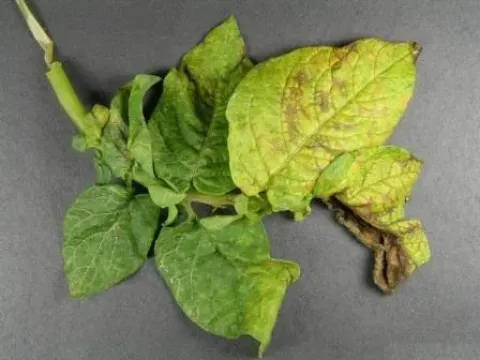
Pepper mottle virus
Pepper mottle virus
Pepper mottle virus (PepMoV) is a plant pathogenic virus belonging to the genus Potyvirus. It consists of flexuous filamentous particles that contain a single-stranded RNA genome, which facilitates its transmission and replication within the host.
What the section contains
Pepper mottle virus
The virus has a specific host range, primarily infecting members of the Solanaceae family, including peppers (Capsicum spp.) and soybeans. It relies on various weed species within its habitat to serve as a reservoir during the off-season.
Transmission occurs primarily through insect vectors, with various species of aphids being the most significant. The virus is transmitted in a non-persistent manner, meaning aphids can acquire and transmit the virus within seconds of feeding on infected plant tissue.
Mechanical transmission is also a factor, particularly in high-density farming or greenhouse environments where pruning, harvesting, and other handling activities can transfer sap containing the virus between plants.
Once infected, the virus spreads systematically throughout the plant's vascular system. Its replication disrupts normal cellular metabolism, leading to stunted growth and impaired fruit production throughout the remainder of the plant's life cycle.
The most prominent symptoms of PepMoV include a distinct mosaic pattern on the leaves, characterized by irregular patches of light and dark green discoloration, often referred to as mottling.
Infected plants frequently exhibit significant morphological changes, such as leaf distortion, curling, or the development of thin, thread-like leaves. This foliage deformation significantly reduces the plant's photosynthetic capacity.
Plants infected at an early stage suffer from severe stunting. Internode length decreases, leading to a compact, bushy appearance that inhibits normal vertical growth and branch development.
Fruit symptoms are particularly devastating to yield quality. Affected pepper fruits often show necrotic spots, chlorotic streaking, or severe malformation, rendering them unsuitable for commercial sale.
- Veinal chlorosis or yellowing of the leaf veins.
- Reduced flower set and increased abscission of buds.
- Overall loss of plant vigor leading to yield decline.
Disease prevalence is heavily dependent on the population dynamics of aphid vectors. Warm weather conditions, which promote the rapid multiplication and migration of aphids, significantly increase the risk of field-wide outbreaks.
Greenhouse environments offer favorable conditions for the rapid spread of the virus. High plant density and stable temperatures allow aphids to move freely between plants, facilitating a rapid infection cycle.
Proximity to alternative hosts, such as wild solanaceous weeds, provides a constant source of inoculum. If these weeds are not cleared, they act as permanent focal points for new infections throughout the growing season.
Poor agricultural practices, such as failing to implement integrated pest management (IPM) to control insect populations, are the primary drivers of disease spread in large-scale farming operations.
Environmental stress factors, such as drought or nutritional imbalances, can make plants more susceptible to systemic virus infection, as their natural defense mechanisms are weakened under stress conditions.
Pepper mottle virus is a major economic threat, capable of causing yield losses ranging from 50% to 80% depending on the timing of infection. Early infections often result in a total loss of marketable fruit.
The disease causes profound metabolic changes in the host, leading to premature senescence. This drastically shortens the productive lifespan of the pepper crop, causing significant financial loss to growers.
Systemic viral infection suppresses the plant's natural immune system, making it much more susceptible to opportunistic secondary infections, such as fungal pathogens or bacterial rots that further damage the crop.
For soybean growers, the virus can negatively impact seed quality, reducing germination rates and seed weight, which can have long-term consequences for future crop production cycles.
Because there is no "cure" for a virus-infected plant, the economic impact is compounded by the labor and costs associated with rogueing (removing and destroying) infected plants to prevent further spread.
The primary control strategy is the intensive management of aphid populations. Using systemic insecticides early in the season can significantly reduce the window of opportunity for virus transmission.
Strict sanitation measures are essential. Growers must eliminate all weeds within and around the production area, as these act as the primary overwintering sites and sources of the virus.
Only certified, virus-free seed or transplants should be used. Growing seedlings in isolated, insect-proof environments is highly recommended to ensure the crop starts free of infection.
Hygiene during handling is vital. Tools and equipment should be regularly disinfected to prevent the mechanical transfer of virus-laden sap from one plant to another during field activities.
Breeding and planting resistant or tolerant cultivars is the most sustainable approach to long-term disease management. Genetic resistance provides a reliable shield against Potyvirus infections in endemic regions.