
Tomato chlorosis
Crinivirus flavisolani
Description
Symptoms
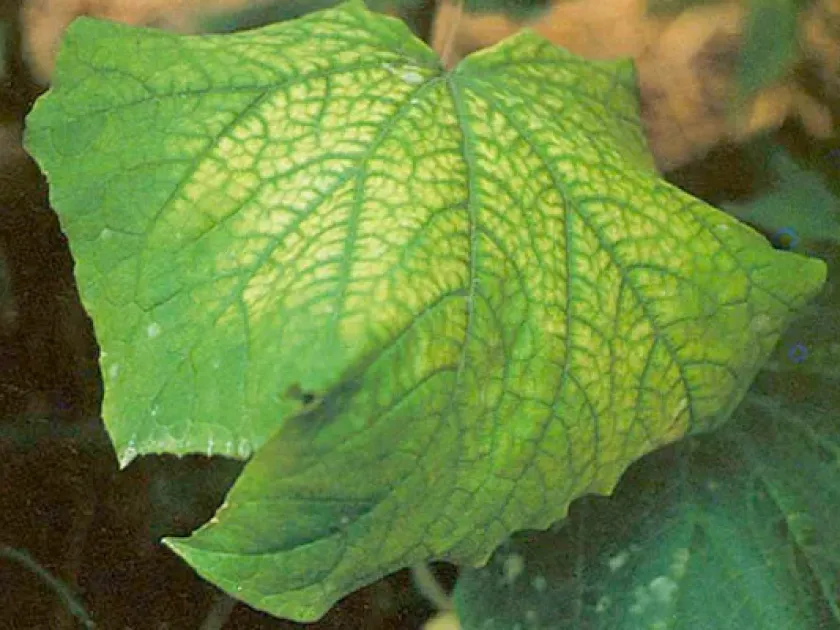
The initial symptoms appear as interveinal chlorosis on the lower, older leaves. The leaf veins remain green, which gives the plant a distinct mottled or yellow-spotted appearance.
Over time, the chlorosis progresses upward through the canopy. The affected leaves often become thickened, brittle, and leathery, which distinguishes this condition from simple nutrient deficiencies.
Growth of the plant is significantly stunted. Infected plants typically exhibit shortened internodes and a general lack of vigor, making them appear smaller compared to healthy neighboring plants.
Fruit set is drastically reduced in infected plants. Any fruit that does develop is often smaller, less flavorful, and of poor commercial quality, leading to substantial yield losses.
- Interveinal chlorosis on older leaves.
- Thickened, brittle, and leathery leaf texture.
- Reduced plant vigor and stunted growth.
- Significant decrease in yield and fruit quality.
Pathogen
Tomato chlorosis is caused by viruses belonging to the genus Crinivirus, specifically the Tomato infectious chlorosis virus (TICV) and the Tomato chlorosis virus (ToCV). These are bipartite, single-stranded RNA viruses.
These viruses are phloem-limited, meaning they reside and replicate within the transport tissues of the plant. They do not spread through mechanical contact or seed transmission under normal circumstances.
The transmission is strictly vectored by whiteflies, including the greenhouse whitefly (Trialeurodes vaporariorum) and the tobacco whitefly (Bemisia tabaci). The virus is acquired by the insect during feeding on an infected host plant.
Once acquired, the whitefly becomes a carrier, retaining the virus for an extended period, which allows for efficient spread within greenhouses and open fields over long distances.
The host range is broad, affecting several solanaceous crops like peppers, potatoes, and eggplants, as well as various common weeds that act as reservoir hosts during off-seasons.
Conditions for development
The disease spread is heavily dependent on the whitefly population density. High numbers of whiteflies in protected cultivation environments facilitate rapid viral transmission.
Warm and humid conditions favor whitefly reproduction. In greenhouse settings, the virus can persist throughout the year if host plants or weeds are available for the insects to feed on.
The presence of wild hosts or weeds near the cultivation area provides a bridge for the virus, allowing whiteflies to pick up the pathogen before migrating to young tomato plants.
Management practices that allow for multiple tomato plantings of different ages in the same facility increase the risk of the virus being moved from older, infected plants to younger, susceptible ones.
Successful viral development requires the physiological active phase of the plant, ensuring the virus can move through the phloem to establish a systemic infection throughout the organism.
Why it matters
The economic impact of Tomato chlorosis is primarily driven by yield reduction. Although the plants rarely die directly from the virus, they become unproductive and essentially useless for fresh market sales.
Because there is no cure for viral plant diseases, infected plants serve as a persistent source of inoculum for the rest of the crop, forcing growers to discard affected units.
Plants weakened by the virus become more susceptible to secondary pathogens, including opportunistic fungi and bacteria, which take advantage of the plant's impaired immune system.
Continuous efforts to manage the whitefly vector add significant costs to production. Without strict control, the disease can lead to total crop failure within a greenhouse cycle.
The cumulative effect of reduced production and increased chemical or biological control costs makes Tomato chlorosis one of the most challenging viral threats in modern horticulture.
Protection
Control measures must focus primarily on whitefly management. Integrating chemical insecticides with biological control agents is essential to keep the vector population below the threshold of transmission.
Exclusion techniques, such as covering greenhouse vents with fine-mesh insect screens, are highly effective in preventing whiteflies from entering the production facility from the outside.
Regular monitoring using yellow sticky traps allows for the early detection of whitefly adults, prompting timely intervention before the virus can be effectively transmitted to healthy crops.
Rigorous sanitation involves the prompt removal and disposal of any plants showing symptoms. Eliminating reservoir weeds in and around the greenhouse is equally critical for breaking the infection cycle.
Implementing a crop-free period, where the greenhouse is left empty for several weeks, can help break the lifecycle of the whitefly and eliminate the reservoir of the virus, providing a clean start for the next cycle.
Discussion
No discussions yet — be the first.