
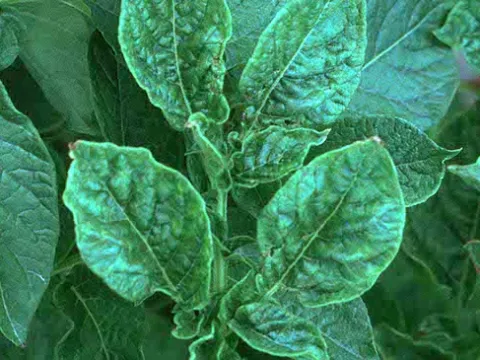
Potato virus A
Potato virus A
Potato virus A (PVA) is a plant pathogenic virus belonging to the genus Potyvirus within the Potyviridae family.
What the section contains
Potato virus A
The virus is transmitted by several aphid species in a non-persistent manner, meaning the insect can acquire and transmit the virus after very brief feeding probes.
Common vectors for the virus include Myzus persicae (green peach aphid) and other aphid species that colonize solanaceous crops.
Besides insects, the virus is easily spread via mechanical contact between leaves of infected and healthy plants during field cultivation or handling.
PVA is systemic in nature, meaning it infects the entire plant and remains present in tubers, which serves as a primary source for re-infection in subsequent seasons.
Symptoms of Potato virus A infection can vary widely depending on the potato cultivar, environmental conditions, and the timing of infection.
The most characteristic symptom is a mild to moderate mosaic pattern on the leaves, where light and dark green areas alternate irregularly.
In susceptible varieties, leaves may exhibit slight crinkling or wavy edges, which is a common diagnostic feature for field identification.
When the infection is severe, plants may show stunted growth and reduced vigor, often resulting in a diminished canopy size compared to healthy specimens.
On pepper plants, the virus typically manifests as leaf mottle and systematic stunting, which hinders overall plant development and reduces fruit set.
The spread of PVA is highly dependent on aphid migration patterns, which typically increase during warm and dry periods of the growing season.
Infected "seed" tubers planted in the spring serve as the initial inoculum, allowing the virus to spread to surrounding healthy plants.
Weed hosts, particularly perennial members of the Solanaceae family, can harbor the virus, acting as a bridge between growing seasons.
Environmental factors that favor high aphid reproduction rates directly correlate with a higher incidence of viral transmission within the field.
Dense planting and poor weed management can exacerbate the conditions for rapid viral spread across potato plots.
Potato virus A causes significant economic losses primarily through the reduction of tuber yield and quality in infected potato crops.
Yield loss is generally cumulative over consecutive generations if infected tubers are continually used as planting material, leading to severe degeneration.
Tuber quality is affected as well, with infected plants producing smaller tubers that may have irregular shapes, decreasing their marketability.
The physiological stress caused by the virus makes the crop more susceptible to other secondary infections and environmental stressors.
Farmers face financial risks not only from lower yield but also from the increased cost of obtaining high-quality, virus-free seed stock.
The use of certified virus-free seed tubers, produced through tissue culture techniques, is the most effective way to prevent PVA outbreaks.
Implementing a strict roguing program, where plants showing symptoms are identified and removed early in the season, is essential for minimizing spread.
Effective aphid control using strategic insecticide applications can help reduce the population of vectors and break the cycle of transmission.
Maintaining adequate isolation distances between potato fields and other susceptible crops reduces the risk of outside viral pressure.
- Planting resistant or tolerant potato varieties.
- Sanitizing field equipment and tools regularly.
- Controlling alternative weed hosts around the farm.