
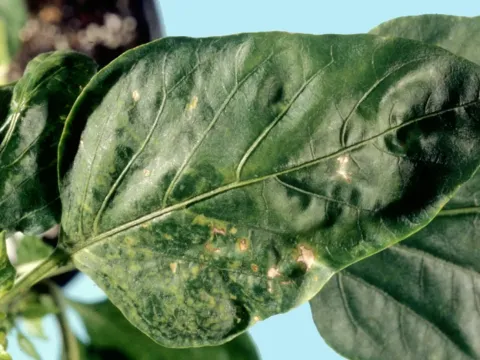
Tobacco etch virus
Tobacco etch virus
The Tobacco etch virus (TEV) is a plant pathogenic virus belonging to the genus Potyvirus within the family Potyviridae. It consists of a single-stranded RNA genome enclosed in a filamentous particle approximately 730 nm in length.
What the section contains
Tobacco etch virus
Perennial weeds serve as the primary natural reservoir for the virus, allowing it to survive during winter months. The virus has a wide host range, primarily affecting plants in the Solanaceae, Chenopodiaceae, and Asteraceae families.
Transmission occurs primarily in a non-persistent manner through the stylets of aphid vectors. While mechanical transmission via contact with infected sap is possible under laboratory or specific field conditions, aphid transmission is the dominant route in commercial agriculture.
The virus rapidly colonizes host tissues, spreading systemically throughout the plant. The latency period varies depending on the specific environmental conditions and the host's physiological state.
Genetic variability among different TEV strains contributes to varying levels of symptom severity, complicating early diagnosis in field environments where mixed infections may also occur.
Initial symptoms typically appear on young foliage as a mosaic pattern, chlorotic spots, and vein clearing. As the infection progresses, leaves exhibit characteristic necrotic lines and etching patterns, which provide the basis for the virus's name.
Infected plants frequently show severe leaf distortion, curling, and stunted growth. Internode shortening is a common trait, often resulting in a rosette or dwarf phenotype that indicates a significant physiological decline.
Fruits from infected solanaceous crops often become deformed and may exhibit surface mottling or necrotic ring spots. This damage significantly degrades the market value of crops like peppers and tomatoes.
Floral development can be hindered, leading to flower deformation or color breaking, which reduces successful pollination and fruit set. The overall plant appearance is usually chlorotic, reflecting reduced photosynthetic efficiency.
- Vein clearing (vein-banding).
- Mosaic patterning on leaves.
- Necrotic etching or line patterns.
- Leaf distortion and curling.
- Stunted growth and reduced biomass.
Aphids, particularly the green peach aphid (Myzus persicae), are the primary vectors of TEV. The intensity of an epidemic is closely linked to the population dynamics and migration patterns of these insect vectors.
Warmer, dry weather conditions promote the rapid reproduction and migration of winged aphid forms, facilitating the quick spread of the virus across fields. Under these conditions, a high percentage of plants can become infected within a very short timeframe.
The proximity of weed reservoirs, such as nightshades, ensures a continuous supply of the virus throughout the growing season. Efficient weed management is therefore critical to reducing local inoculum sources.
Temperature plays a key role in systemic movement; warmer temperatures generally speed up plant metabolic rates, allowing the virus to move more rapidly through the plant's phloem system.
Poor agricultural practices, such as lack of weed control and failure to monitor pest populations, act as the primary catalysts for the widespread outbreaks of TEV observed in large-scale farming operations.
Tobacco etch virus causes significant economic losses in tobacco, tomatoes, peppers, potatoes, and beans. Yield losses in highly susceptible cultivars can reach 30–70%, rendering fields economically non-viable in severe cases.
Reduced photosynthetic rates in infected plants lead to diminished vegetative and reproductive growth. This results in smaller fruits, lower seed yield, and poorer overall quality of the harvested produce.
For tobacco growers, TEV infection is devastating, as the necrotic lesions on leaves prevent proper curing and fermentation, making the leaves unacceptable for premium cigarette or cigar production.
Systemic infection in perennials or long-cycle crops often leads to premature senescence or long-term vigor reduction, necessitating costly replanting efforts and increased management expenses.
Indirect costs include intensive pesticide use aimed at controlling aphids, which, despite heavy applications, often fails to fully eliminate the risk of transmission due to the virus's non-persistent nature.
Rigorous sanitation and weed management are essential. Eliminating reservoir weeds in and around fields prevents the virus from surviving the off-season and reduces the primary source of initial infection.
Breeding and planting resistant or tolerant crop varieties remains the most effective long-term management strategy. Many commercial tomato and pepper varieties now incorporate specific genetic resistance to TEV.
Systematic monitoring of aphid populations combined with the application of appropriate insecticides can reduce vector numbers. It is vital to use integrated pest management (IPM) to avoid the development of insecticide resistance.
Using floating row covers or protective screens during the early stages of plant growth can physically prevent aphid vectors from landing on and feeding upon young, vulnerable crops.
Maintaining strict hygiene protocols, including regular disinfection of pruning tools and equipment, prevents accidental mechanical transmission. Prompt removal and destruction of symptomatic plants are necessary to minimize the virus spread within a closed environment like a greenhouse.