
Tomato bushy stunt virus
Temfrudevirus
The causal agent of the disease is the Temfrudevirus (Tomato bushy stunt virus), a plant pathogenic virus that affects various solanaceous crops.
What the section contains
Tomato bushy stunt virus
This virus systemically infects the vascular tissue of the host plant, disrupting its metabolic processes and inhibiting natural hormone balance.
The virus biology is characterized by its high replicative capacity within living plant cells, which severely compromises the plant's structural development.
Transmission in agricultural settings occurs primarily through mechanical contact during routine maintenance or via contaminated gardening tools.
Scientific evidence indicates that the virus can persist for long periods in crop residues, making soil and substrates primary reservoirs for infection.
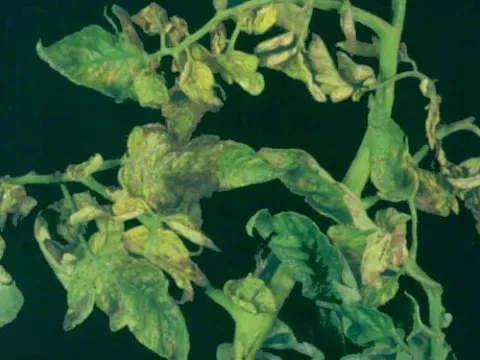
The primary symptom is severe growth retardation, resulting in a distinct, stunted, and "bushy" appearance of the infected tomato plants.
Terminal leaves often exhibit significant deformation, becoming small and curled, which limits the plant's photosynthetic efficiency.
Internodes are severely shortened, leading to dense clusters of lateral shoots that give the plant a rosette-like or congested morphology.
During the flowering stage, affected plants show poor fruit set, and flowers often display anomalous structural development.
In advanced stages of infection, chlorotic spotting may appear on the foliage, eventually progressing to necrosis as the disease intensifies.
High ambient temperatures in greenhouses promote the development of the virus by imposing physiological stress on the host plants.
Excessive humidity combined with poor ventilation creates an ideal environment for the rapid spread of viral particles between neighboring plants.
Infection events frequently coincide with intensive maintenance tasks like pruning or suckering, especially when sanitation protocols are ignored.
Weakened plants suffering from nutrient deficiencies or irregular watering schedules are significantly more susceptible to viral invasion.
High planting density accelerates the dissemination of the pathogen through physical contact between the foliage or root systems of healthy and infected plants.
The disease causes significant economic loss, with potential yield reductions in commercial greenhouses ranging from 30% to 70%.
Fruits produced on infected bushes are typically small, malformed, and lack the quality required for commercial fresh market distribution.
The virus induces premature senescence, which drastically shortens the productive lifespan of the tomato crop.
The inability to harvest high-quality seeds from infected plants is a major issue, as the virus can be transmitted through seeds.
Once introduced into a greenhouse, infected plants act as hubs for ongoing infection, threatening subsequent planting cycles.
The cornerstone of disease management is strict phytosanitary compliance and rigorous disinfection of tools between each individual plant.
Prompt roguing and destruction of any plants displaying early signs of stunting or deformation are essential to preventing wider outbreaks.
Utilizing resistant cultivars and certified hybrids remains the most effective strategy for mitigating virus pressure in industrial production.
Controlling weed populations around the greenhouse perimeter is vital, as these plants often serve as alternative hosts for the virus.
- Use only certified, disease-free seed stock.
- Maintain optimal greenhouse climate to prevent heat stress.
- Implement strict sanitation training for all farm personnel.
- Balance plant nutrition to enhance natural defense mechanisms.
- Rotate crops and treat soil with appropriate disinfectants.