
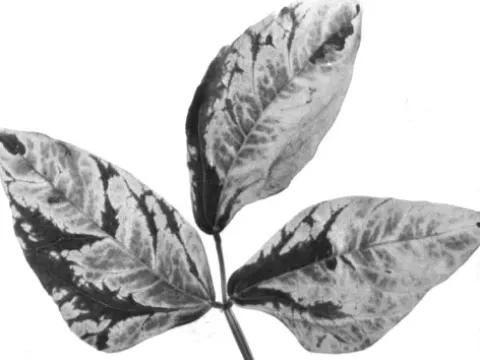
Cowpea mosaic virus
Potyvirus vignae
The causal agent is the Cowpea aphid-borne mosaic virus (CABMV), a member of the Potyvirus genus. It is a single-stranded RNA virus known for its broad host range among leguminous crops.
What the section contains
Cowpea mosaic virus
The disease is systemic, meaning it infects the plant's vascular system, causing widespread physiological disruption. It can be seed-borne, which is a major pathway for the introduction of the virus into previously healthy agricultural land.
The virus persists in perennial wild legumes, which serve as environmental reservoirs during the off-season. This persistence ensures a continuous cycle of infection in cultivated fields.
Transmission occurs via aphids, particularly the Aphis craccivora species. The virus is transmitted in a non-persistent manner, allowing aphids to spread the infection rapidly from one plant to another during feeding.
Due to the short acquisition and inoculation times, control of the vector population is extremely challenging, making the virus a persistent threat to legume production.
The most common symptoms include a distinct mosaic pattern on leaves, characterized by alternating patches of light green and dark green tissue, often accompanied by leaf distortion or crinkling.
Infected plants show stunted growth and a reduced internode length, resulting in a dwarf or rosetted appearance that significantly hampers biomass development.
Floral development is frequently disrupted, leading to deformed flowers, flower drop, and a drastic reduction in pod set efficiency.
Pods that do develop on infected plants are often small, curved, and contain fewer, lower-quality seeds, which can directly lead to significant yield losses at harvest time.
Early-stage infection in seedlings may present as yellowing or chlorotic spotting along the leaf veins, which often progresses into systemic mosaic patterns as the plant matures.
Favorable conditions for the virus include warm temperatures and high aphid activity, which are essential for the rapid spread of the pathogen across large areas.
Climatic stress, such as drought or heat waves, can exacerbate the impact of the virus, making the plants more susceptible to symptoms and further reducing their recovery capacity.
The proximity of weedy borders or unmanaged fields provides a habitat for aphids, significantly increasing the risk of virus introduction into commercial production areas.
High plant density and improper field sanitation can lead to a microclimate that supports larger aphid populations, thereby accelerating the rate of viral transmission between healthy and infected plants.
Insufficient crop rotation cycles lead to the accumulation of viral reservoirs in the soil or local flora, increasing the infection pressure for subsequent planting seasons.
Cowpea mosaic virus causes severe economic damage to agricultural production, with yield losses ranging from 30% to 80% in susceptible varieties.
Beyond quantity, the quality of the harvested product is compromised, as deformed pods and smaller seeds make the harvest less marketable and unsuitable for use as future seeds.
The disease weakens the overall vigor of the plant, making it more prone to secondary infections from fungi or bacteria, which can lead to complete plant collapse.
Costs for farmers are elevated due to the need for intensive insecticide management programs to control the aphid vectors throughout the growing season.
Because there is no curative treatment for plants once they are infected, the damage is essentially permanent for the season, necessitating a heavy reliance on preventative strategies.
The primary control strategy is to use only high-quality, certified, and virus-free seed stock to prevent early-season introduction of the pathogen into the fields.
Implementing a rigorous monitoring program for aphid populations and using timely insecticide applications can help reduce the transmission rate of the virus.
Maintaining proper spatial isolation between cowpea fields and other legume crops that are susceptible to the same virus is highly recommended.
Regular sanitation of field edges and the removal of weed species that serve as virus reservoirs are essential steps in reducing primary infection sources.
- Adopting a strict crop rotation schedule;
- Rouging and destroying symptomatic plants immediately upon detection;
- Selecting and breeding cultivars with known resistance to viral infection.