
Crinivirus pseudobetae
Crinivirus pseudobetae
Crinivirus pseudobetae is a plant virus belonging to the genus Crinivirus within the Closteroviridae family. It is characterized by a positive-sense single-stranded RNA genome and primarily colonizes the phloem of host plants.
What the section contains
Crinivirus pseudobetae
Transmission of this virus is semi-persistent, meaning the virus is acquired and transmitted by its vector—typically whitefly species—over a period of several hours to days after feeding.
The virus does not have mechanical transmission capabilities and cannot be spread via contact with sap or infected seeds, making the whitefly population the central focus for disease management strategies.
The biological complexity of Crinivirus pseudobetae allows it to survive in various weed reservoirs, facilitating its persistence in the environment across multiple cropping seasons.
The viral particles interfere with host cell functions, specifically targeting the phloem tissue, which is essential for nutrient transport, leading to systemic infection throughout the entire plant organism.
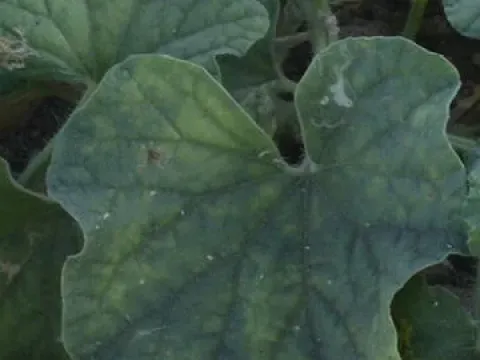
Symptoms often manifest as distinct chlorotic spots on the leaf surface, which may evolve into interveinal yellowing. This is a classic sign of many crinivirus infections in agricultural crops.
Infected plants frequently exhibit signs of mosaic patterns and leaf curling, where the edges of the leaves distort or roll, hindering the plant's ability to efficiently capture sunlight for photosynthesis.
A significant reduction in vegetative growth is observed, resulting in stunted plants that fail to reach their full physiological potential compared to healthy crops in the same field.
In severe cases, premature senescence of lower leaves occurs, causing them to yellow and drop off. This leads to a marked reduction in the overall leaf area, which severely impacts plant vitality.
- Interveinal chlorosis and yellowing
- Leaf mosaic and discoloration
- Distortion and upward/downward curling
- Stunted plant growth and reduced vigor
- Premature leaf drop in lower foliage
The spread of Crinivirus pseudobetae is strictly governed by the population dynamics of its whitefly vectors. Warm temperatures and adequate humidity significantly accelerate the life cycle of these insects.
The presence of weeds acting as alternative hosts creates a bridge for the virus, allowing it to survive periods when the primary cash crops are not in the field.
High-density planting and poor air circulation within the canopy contribute to a favorable microenvironment for the rapid multiplication and migration of whiteflies, exacerbating the spread of infection.
Inadequate isolation distances between newly planted crops and older, infested fields frequently result in high infection rates early in the season due to vector movement.
Farming practices that neglect weed control or fail to manage insect populations early in the season create an environment conducive to the establishment and persistence of the viral pathogen.
The primary economic impact of this virus is a significant reduction in overall yield. By impairing nutrient transport via the phloem, the virus prevents plants from producing high-quality harvests.
Quality degradation is common, as infected plants often fail to reach standard sugar levels, size, or texture, making them unsuitable for market or industrial processing standards.
Increased susceptibility to secondary pathogens is a critical issue; plants weakened by Crinivirus pseudobetae are far more likely to succumb to opportunistic fungal or bacterial infections.
Financial losses are compounded by the high costs associated with intensive insecticide programs aimed at vector control and the potential loss of entire field segments due to disease pressure.
Furthermore, the virus renders the seed or propagative material unreliable, which disrupts long-term planning and forces producers to source new, expensive inputs every planting cycle.
Management of Crinivirus pseudobetae is fundamentally based on vector control. Integrated Pest Management (IPM) strategies, including rotating insecticide classes, are essential to prevent resistance.
Maintaining strict field sanitation is crucial. Removing weeds and clearing crop residues reduces the viral reservoir, minimizing the chances of whiteflies acquiring and spreading the infection.
Using certified, virus-free planting material prevents the initial introduction of the virus into clean areas. Spacing out planting cycles and ensuring spatial isolation from infested fields are effective techniques.
For protected cropping environments, the use of fine-mesh insect screens and biological control agents like predatory mites or parasitic wasps significantly lowers vector pressure without chemical input.
Regular field monitoring and immediate removal of symptomatic plants help in containing the virus spread, preventing localized patches from evolving into a field-wide infestation.