
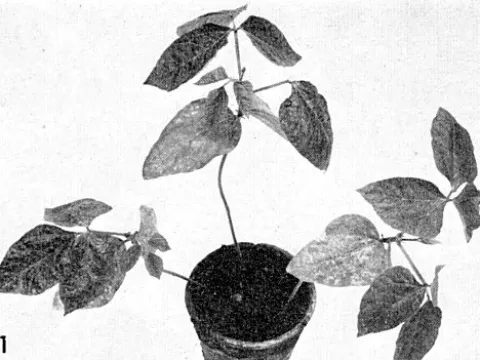
Cowpea chlorotic mottle virus
Bromovirus ccmv
The causal agent is the Cowpea chlorotic mottle virus (CCMV), a member of the Bromoviridae family and the Bromovirus genus.
What the section contains
Cowpea chlorotic mottle virus
The virus consists of small icosahedral particles containing a tripartite single-stranded RNA genome, which makes it highly adaptable.
It is commonly transmitted through mechanical inoculation, often occurring during agricultural operations or through contact between infected and healthy tissues.
Insects, particularly beetles, serve as primary vectors, facilitating the spread of the virus while feeding on plant leaves.
CCMV is known for its stability, allowing it to persist in infected seeds and plant debris, posing a risk for subsequent planting seasons.
Infected plants typically exhibit distinct chlorotic mosaic patterns on their leaves, often characterized by yellowing and discoloration.
Vein clearing is a common early symptom, which eventually develops into more pronounced yellow patches and irregular mottling.
Leaves of diseased plants frequently show signs of distortion, wrinkling, and curling, hindering the plant's overall photosynthetic capacity.
Systemic symptoms also include stunted growth and shortened internodes, leading to a significant reduction in the size of the plant.
- chlorotic mosaic;
- leaf distortion and curling;
- stunted plant height;
- reduced pod formation.
Warm environmental conditions are conducive to the spread of the virus as they favor the population growth and activity of insect vectors.
High plant density increases the likelihood of mechanical transmission through leaf contact during windy conditions or human handling.
The presence of wild legume weeds acts as a reservoir for the virus, enabling it to survive throughout the year.
Improper cleaning of agricultural machinery and tools plays a critical role in spreading the pathogen across different field sections.
Seed-borne transmission remains a major factor in the introduction of the virus into previously healthy crop fields.
The primary economic impact of CCMV is a substantial loss in crop yield and a reduction in the marketability of harvested legumes.
Infected plants display diminished growth vigor, making them more susceptible to environmental stress and secondary pathogen infections.
Pod production is significantly impaired, often resulting in smaller or deformed pods that fail to meet quality standards.
The reduction in photosynthetic efficiency severely limits the plant's ability to produce necessary nutrients for grain development.
Widespread viral infection can lead to complete economic failure of the crop, necessitating expensive management and eradication efforts.
The use of disease-free, certified seeds is the most effective preventative strategy against CCMV outbreaks.
Implementing a rigorous insect control program is essential to reduce the population of vectors that transmit the virus.
Rogueing, the process of identifying and removing infected plants, should be done promptly to limit further spread within the field.
Strict hygiene protocols, including the sterilization of tools and machinery, must be maintained to prevent human-assisted transmission.
Integrated pest management and crop rotation help mitigate the build-up of viral inoculum in the soil and surrounding environment.