
Crinivirus
Crinivirus
Description
Symptoms
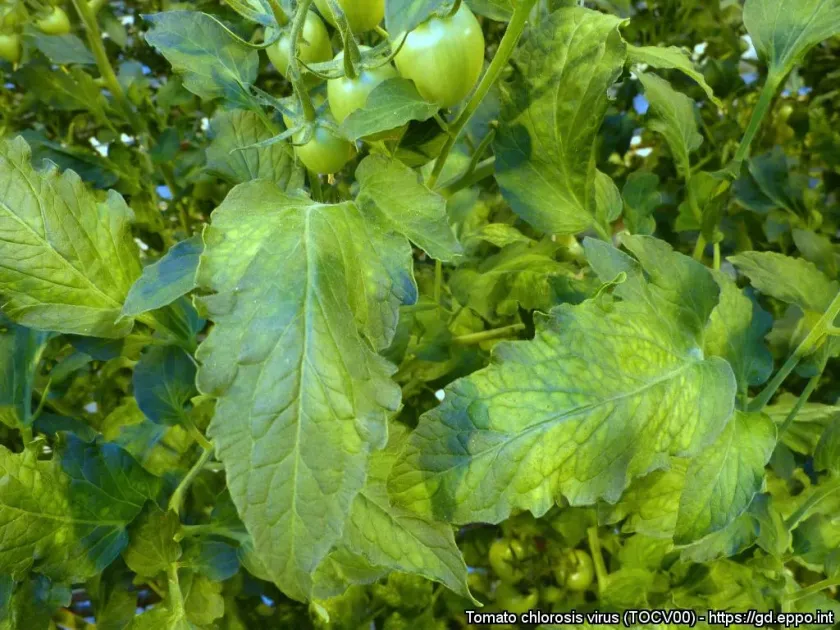
The hallmark symptom of Crinivirus infection is interveinal chlorosis. Leaves show yellowing between the veins, while the leaf tissue immediately surrounding the veins often remains green.
Symptoms typically begin on the lower or older leaves and progress upward toward the canopy. In many crops, the terminal growth may appear relatively normal, which can mask the infection.
Infected plants exhibit stunted growth and reduced vigor. Leaves may become brittle, thick, or display upward/downward curling depending on the specific host and viral strain.
Symptoms often mimic mineral deficiencies, particularly magnesium or nitrogen deficiency. However, supplemental fertilization does not alleviate the chlorosis, confirming a viral cause.
- Interveinal chlorosis (yellowing between veins).
- Upward curling or brittleness of foliage.
- Reduced plant height and overall stunting.
- Significant decrease in flower and fruit set.
- Necrotic spots or bronzing on late-stage infections.
Pathogen
Criniviruses are a genus of plant viruses within the Closteroviridae family. They possess a single-stranded RNA genome and are characterized by long, flexuous, filamentous viral particles.
These viruses are transmitted exclusively by whitefly species (family Aleyrodidae). They are not transmissible by mechanical sap inoculation or through seed, which makes vector control the primary focus.
The virus is strictly phloem-limited, meaning it replicates and resides within the vascular tissues of the host plant. This systemic colonization disrupts the transport of sugars and nutrients.
Common examples include the Tomato chlorosis virus and the Cucurbit yellow stunting disorder virus. These pathogens exhibit narrow host ranges, primarily affecting solanaceous and cucurbitaceous plants.
The transmission is semi-persistent, meaning the whitefly vector acquires the virus after feeding on an infected plant and retains the ability to inoculate healthy plants for a period of several days.
Conditions for development
The development of the disease is intrinsically linked to the whitefly population density. Optimal viral spread occurs in greenhouse environments where stable temperatures ranging from +20 to +28 degrees Celsius prevail.
High humidity levels facilitate the rapid reproduction of whiteflies. As the vector population increases, the frequency of contact with healthy plants rises, accelerating the epidemic.
Wild host plants act as natural reservoirs, harboring the virus during off-seasons. In many regions, weeds serve as the primary source of inoculum that whiteflies transmit to commercial crops.
The movement of asymptomatic infested transplants is the most common way Crinivirus is introduced into new production areas. Once established, the virus spreads rapidly within enclosed spaces.
Poor ventilation and high plant density are environmental factors that promote the efficient movement of whiteflies, significantly increasing the probability of widespread infection within the crop.
Why it matters
Crinivirus infection causes significant economic losses by reducing fruit quality and total yield. Photosynthetic efficiency is impaired, leading to smaller, misshapen, and poorly developed fruits.
Infected crops show increased susceptibility to secondary stresses, including fungal infections and environmental pressures, which further diminishes the overall health of the planting.
Yield losses can range from 30 to 70 percent, depending on the stage of infection. Early infection, particularly at the seedling stage, is usually the most devastating for commercial production.
The fruit quality, including sugar content and shelf life, is negatively affected, making the produce less attractive for market consumption and unsuitable for long-term storage or processing.
Since there is no curative treatment for viral diseases, the presence of Crinivirus often necessitates the roguing and destruction of infected plants, resulting in direct financial losses to the grower.
Protection
The most effective strategy is the rigorous management of whitefly populations. Integrated Pest Management (IPM) programs should prioritize the use of insecticides to suppress vectors before virus transmission occurs.
Yellow sticky traps are essential for monitoring whitefly populations. Early detection of vectors allows growers to adjust their pest management schedule proactively.
Strict sanitation protocols are required to manage the disease. This includes the removal of all crop debris at the end of the season and thorough disinfection of greenhouse structures to eliminate sources of inoculum.
Growers should use only certified, pest-free transplants. Installing insect-proof screens on greenhouse vents can effectively prevent the entry of whiteflies from the surrounding environment.
Maintaining a clean weed-free perimeter around production sites is critical to prevent whiteflies from migrating from natural reservoirs into the greenhouse or field, thereby reducing the risk of viral entry.
Discussion
No discussions yet — be the first.