
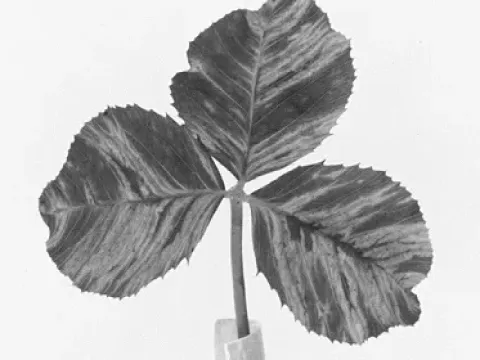
Clover yellow vein potexvirus
Potexvirus flavitrifolii
The primary symptom of this infection is the appearance of chlorotic spots on the clover leaves. These spots typically exhibit a yellowish hue and can be scattered across the leaf blade or concentrated along the veins.
What the section contains
Clover yellow vein potexvirus
As the viral infection progresses, a characteristic mosaic pattern often develops. The leaves may become deformed and stunted, which results in a significant reduction in both the aesthetic quality and the forage value of the plant.
In cases of severe infection, plants show clear signs of growth retardation. Internodes become shortened, and the overall plant density in the field decreases, making affected patches easily identifiable against healthy growth.
Early-stage symptoms can be latent or subtle, making them difficult to detect without careful inspection. It is only under favorable environmental conditions that the symptoms become widespread and distinct.
Distinguishing this viral disease from fungal leaf spots is essential. Unlike fungal pathogens, this virus does not leave any visible signs of sporulation on the leaf surface, which is a key diagnostic feature.
The causative agent is Potexvirus flavitrifolii, a member of the Potexvirus genus. It consists of flexible, filamentous virions containing single-stranded RNA as its genetic material.
The virus primarily targets species within the genus Trifolium. It causes a systemic infection, meaning the pathogen spreads through the plant's vascular system, disrupting its core physiological processes.
Transmission in field settings occurs primarily through mechanical means. This includes contact between diseased and healthy plants, as well as the transfer of sap via agricultural machinery or grazing livestock.
The virus can persist in the overwintering parts of perennial plants. This establishes existing clover fields as a constant reservoir of infection that can spread to newly established plantings.
While some insect species are occasionally investigated as potential vectors, mechanical transmission through damaged plant tissues during field management remains the most critical pathway for viral dissemination.
The virus thrives under moderate temperatures that support active clover growth. The most rapid viral replication and symptom expression occur during peak vegetation periods when the plant's metabolism is highest.
High planting density significantly increases the risk of transmission. Close proximity between plants allows for frequent physical contact, facilitating the spread of the virus through even minor mechanical injuries.
Field operations that involve physical contact with the crop, such as mowing, harvesting, or heavy grazing, create favorable conditions for viral spread, especially in dry and warm weather.
Continuous monocropping of clover on the same site for several years leads to the accumulation of the pathogen in the soil and remaining plant debris, increasing the infection pressure each season.
Plants under stress—due to drought, nutrient deficiency, or competition from weeds—show increased susceptibility to the virus, and the external symptoms of the disease are usually much more severe in these cases.
The primary economic impact is a substantial reduction in green biomass yield. This directly affects the productivity and profitability of farms that rely on clover as a primary forage source.
The disease reduces the nutritional quality of the hay or silage produced. Infected tissues show significantly lower concentrations of proteins and soluble sugars, which decreases the feed efficiency for livestock.
Viral infection leads to premature senescence of leaves, which drains the plant's resources and weakens the root system. Consequently, infected plants are less winter-hardy and prone to winterkill.
Affected stands are more vulnerable to secondary infections and infestations by other pests, which accelerates the degradation of the field and requires early intervention or replanting.
The cumulative damage often forces farmers to shorten the economic life of the crop, necessitating earlier field renewal and incurring additional costs for seed and soil preparation.
Implementing a rigorous crop rotation schedule is the most effective preventative measure. Avoiding clover cultivation on the same plot for at least 4–5 years helps break the viral life cycle.
Using certified, high-quality, and virus-free seed is crucial to establishing healthy stands from the outset. This ensures that the crop has the best possible start to develop resistance.
Strict field hygiene is necessary when operating machinery. Cleaning and disinfecting equipment after working in infected areas prevents the inadvertent transfer of the virus to clean plots.
Managing weed populations, particularly those belonging to the Fabaceae family, is vital as they can serve as alternative hosts, maintaining the virus in the field environment between clover seasons.
Promoting plant vigor through proper fertilization and balanced soil management strengthens the clover's natural immunity, allowing it to better tolerate and resist viral infection symptoms.