
Clover nanovirus
Nanovirus trifolii
Description
Symptoms
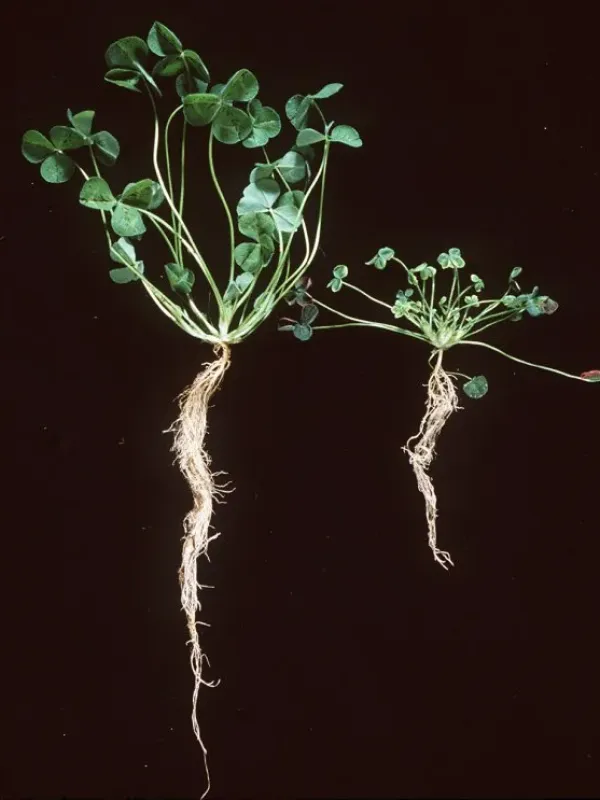
The primary symptom is stunting, where infected plants show significantly reduced growth compared to healthy specimens, often forming low-growing, dense clumps.
Characteristic leaf deformation occurs: leaves become smaller, curled, and often display chlorotic or yellowish discoloration. The leaf margins frequently curl downwards or inward.
Internode elongation is inhibited, resulting in a rosette-like growth habit. Flowering is often severely delayed, reduced, or completely absent in heavily infected plants.
The root system of infected clover develops poorly, which diminishes the plant's overall vigor and increases susceptibility to environmental stressors like drought.
- Severe stunting of plants
- Yellowing of leaf margins
- Leaf curling and deformation
- Shortened internodes
Pathogen
The causative agent of the disease is Nanovirus trifolii, a specialized virus belonging to the Nanoviridae family. Its virions are extremely small and possess a segmented genome composed of single-stranded DNA.
The disease is classified as a systemic viral infection. The pathogen colonizes the phloem of the host plant, disrupting the transport of essential nutrients and inhibiting cellular development processes.
Various species of aphids serve as the primary vectors for this virus. The transmission is persistent, meaning the insect remains infectious for a long period after acquiring the virus from a diseased plant.
Due to its systemic nature, the virus spreads through all plant parts, including the root system, making it nearly impossible to eliminate the pathogen from an infected individual plant.
The virus can persist within the rhizomes of perennial plants during winter months, ensuring a continuous reservoir of infection for subsequent growing seasons in the same field.
Conditions for development
Disease progression is highly correlated with aphid population dynamics. Warm and dry weather conditions are critical factors that promote rapid reproduction and spread of insect vectors.
Infection peaks during periods of intense spring regrowth, when young clover tissues provide highly nutritious food sources for aphids, facilitating the transfer of the virus.
Weedy areas surrounding fields serve as crucial reservoirs for both the virus and its vectors. These areas provide a sanctuary for aphids to overwinter and migrate into crops.
High planting density and lack of proper crop rotation cycles create an environment that favors the efficient horizontal transmission of the virus across the field.
Poor agricultural practices, such as imbalanced soil nutrition, weaken the plant's natural immune system, making it more vulnerable to initial viral invasion.
Why it matters
The primary economic impact is a drastic reduction in forage biomass. Yield losses in hay production can reach 30–50% due to the stunted growth of the clover stand.
The nutritional quality of the forage is compromised, with significant decreases in protein and sugar content, making the crop less valuable for livestock feeding.
In seed production fields, the virus causes major losses by disrupting pollination and reducing the formation of viable seeds, leading to a collapse in seed yields.
Viral infection accelerates the decline of clover stands. As infected plants die off, open spaces are quickly colonized by weeds, leading to pasture degradation.
The overall damage often necessitates early field renovation, increasing the financial burden related to soil preparation and re-seeding costs for producers.
Protection
Effective management focuses on controlling aphid populations. The application of systemic insecticides during early growth stages can significantly mitigate the risk of primary infection.
The use of certified, virus-free planting material is essential. Choosing resistant or tolerant clover varieties is a key component of long-term disease management.
Maintaining spatial isolation between newly established clover stands and older, potentially infected fields is critical to limiting the migration of vectors.
Regular weeding of field borders and adjacent lands is recommended to eliminate natural reservoirs of both the virus and the aphid populations.
Optimizing plant nutrition, particularly through balanced potassium and phosphorus fertilization, strengthens the plant's defenses and improves tolerance to infection.
Discussion
No discussions yet — be the first.