
Clover nepovirus
Nepovirus trifolii
The causative agent is Nepovirus trifolii, a virus belonging to the Nepovirus genus. This pathogen is known for its spherical virions and its ability to infect a wide range of legume species.
What the section contains
Clover nepovirus
The virus is systemic, meaning it spreads throughout the entire plant, affecting its vascular system and significantly hindering normal metabolic functions.
Transmission occurs through infected seeds, contaminated agricultural tools, and via specific soil-borne vectors, particularly nematodes of the Longidorus and Xiphinema genera.
The pathogen is highly persistent, capable of surviving in the roots of perennial plants and within the soil for several years, which complicates efforts to eliminate it from an infested site.
By hijacking the plant's cellular machinery, the virus ensures its replication, leading to severe physiological disturbances that manifest as visible disease symptoms.
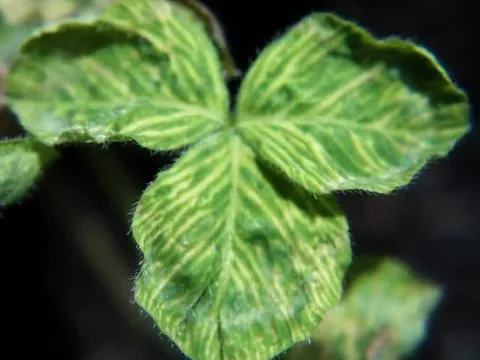
The hallmark symptom is mosaic patterns on the leaves, characterized by chlorotic spots, light streaks, or mottled colorations that disrupt the healthy green appearance of the foliage.
Infected plants frequently exhibit morphological deformities, such as leaf curling, wrinkling, or significant reduction in leaf size, often leading to a stunted growth habit.
Affected clover patches show poor vigor, with shortened internodes and a decrease in overall branching, making the plants noticeably smaller than their healthy counterparts.
Floral development is also adversely affected; blossoms may be deformed, discolored, or fail to produce viable pollen, which severely impacts the seed yield of the crop.
Root systems often show signs of decline, including a reduction in the number of nitrogen-fixing nodules, which further impairs the plant's nutritional status and health.
High soil moisture is the primary environmental factor that promotes the activity of nematode vectors, thereby facilitating the spread of the virus within the field.
Moderate temperatures, typically between 15°C and 22°C, are ideal for the rapid replication of the virus and its efficient transmission throughout the plant tissues.
Close proximity of plants in dense stands increases the likelihood of root-to-root contact, which is a major pathway for the spread of the virus in infested soil.
Poor crop rotation practices, specifically planting legumes consecutively on the same ground, allow for the buildup of both the virus and its nematode vectors over time.
The presence of susceptible weed species along field borders acts as a reservoir for the virus, ensuring a constant source of inoculum for the main crop.
The primary economic damage is caused by a significant reduction in biomass, which directly lowers the yield and quality of clover used for forage and hay production.
Viral infection lowers the nutritional value of the clover by reducing protein and sugar content, making the harvested forage less suitable for livestock feed.
Seed production is heavily impacted due to poor flowering and lower seed viability, which can make seed multiplication programs in infected areas completely unviable.
The lifespan of the clover stand is drastically reduced, leading to premature thinning and the need for costly early reseeding of the fields.
Systemic infection weakens the plants, making them more susceptible to drought, cold stress, and secondary infections by other opportunistic pathogens like root rots.
The most effective strategy is the use of high-quality, certified, and virus-free seed stocks to prevent the initial introduction of the pathogen into the field.
Implementing a strict crop rotation cycle using non-host crops is essential to break the infection chain and reduce the population of soil-borne vectors.
Rigorous weed control is necessary, as many weeds act as symptomless carriers of the virus and provide a bridge for the pathogen between seasons.
Regular field scouting and the rogueing (removal) of infected plants in the early stages can help contain the spread of the virus within a healthy field.
Improving soil health and structure, combined with measures to manage nematode populations, plays a vital role in long-term disease prevention strategies.