
Clover yellow vein virus
Carlavirus trifolii
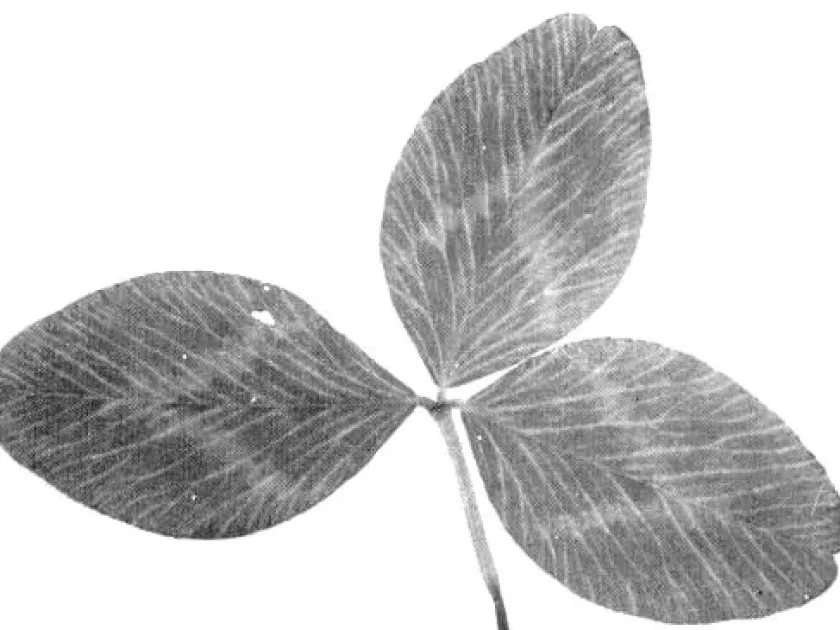
Description
Symptoms
The primary symptom is a distinctive chlorotic mosaic pattern on the leaves, appearing as yellow spots, streaks, or mottled patches. This indicates impaired chlorophyll production and systemic disruption of plant metabolism.
Leaves often exhibit significant morphological deformation, including crinkling, curling, or reduction in size. These structural changes drastically reduce the plant's leaf area available for photosynthesis.
General growth stunting is a hallmark of infection. Infected plants typically display shortened internodes and reduced height, making them appear significantly smaller and less vigorous than healthy counterparts.
Flowering is negatively impacted, with infected plants producing distorted or fewer inflorescences. Flower color may also change, often becoming faded or variegated, reflecting the systemic nature of the viral infection.
Visual diagnosis can be challenging due to symptoms overlapping with other viral diseases, such as Bean yellow mosaic virus. Laboratory-based diagnostic methods like ELISA or RT-PCR are necessary for definitive pathogen identification.
Pathogen
The causative agent is the Clover yellow vein virus (CYVV), a plant pathogen belonging to the genus Potyvirus. It consists of filamentous particles containing a single-stranded RNA genome that invades the host's vascular system.
The virus infects a wide range of plant species, primarily within the Fabaceae family. Common hosts include various clover species (Trifolium spp.), alfalfa, peas, beans, and numerous wild legumes growing in field margins.
As an obligate parasite, the virus relies on mechanical transmission or insect vectors to spread. It cannot move through the environment independently and requires a breach in the host plant's cells to initiate infection.
Aphids (Aphididae) serve as the primary vectors in field conditions. Transmission is non-persistent; aphids acquire the virus during short probes into infected plant tissues and transmit it almost immediately to healthy plants during subsequent feeding.
Perennial legumes act as long-term reservoirs for the virus, where it persists in the root systems throughout the year. Seed transmission also occurs, although it is considered less significant than aphid-mediated spread in the development of field epidemics.
Conditions for development
Virus spread is strongly correlated with aphid population dynamics. Periods of warm, humid weather favor the rapid reproduction of aphid vectors, leading to more frequent plant-to-plant transmission.
The presence of infection sources in the vicinity of fields is a critical factor for epidemic development. Adjacent perennial clover stands or weed-infested field edges act as constant sources of the virus.
Agronomic practices, such as lack of spatial isolation between new and older legume crops, significantly increase the risk. High planting density can also accelerate the spread, as it facilitates the movement of insect vectors between plants.
Environmental stress, such as drought or nutrient deficiency, renders plants more susceptible to systemic infection. Weakened plants lack the physiological resilience to mitigate the viral replication process.
Management of the infection pressure requires careful consideration of the surrounding vegetation landscape, as non-crop hosts play a vital role in maintaining the virus cycle throughout the seasons.
Why it matters
The primary economic impact is a substantial reduction in green mass and seed yield. The nutritional value of forage clover is diminished due to the altered chemical composition of the infected foliage.
Infection leads to premature decline of clover stands, reducing the longevity of perennial pastures. This often forces farmers to replant fields earlier than planned, resulting in significant financial and labor costs.
Cold hardiness is severely compromised in infected plants, as the virus interferes with the storage of carbohydrates in the roots. Consequently, infected clover is far more prone to winter kill.
Infected seeds often show reduced germination rates and low vigor. Furthermore, contaminated seed lots serve as a vehicle for the virus to reach previously uninfected geographical regions.
Susceptibility to secondary pathogens increases, as the virus weakens the plant's overall immune system. This often leads to co-infections with fungal or bacterial pathogens, causing further deterioration of the crop.
Protection
Using certified, virus-free seed is the most fundamental prevention measure. Testing seed lots before planting is essential to avoid introducing the pathogen into clean fields.
Maintaining spatial isolation of at least 500-1000 meters between new legume plantings and old, potentially infected stands is crucial for interrupting the viral transmission cycle.
Sanitation practices, including the removal of legume weeds from field perimeters, are vital. Eliminating these reservoirs reduces the early-season aphid pressure and limits the initial virus inoculum.
Insecticide use should be restricted to cases where aphid populations exceed economic thresholds to avoid unnecessary pesticide impact on beneficial insects and ecosystem balance.
- Utilizing resistant or tolerant clover varieties when available.
- Implementing effective crop rotation with non-host species.
- Optimizing soil fertility to support plant resilience.
- Monitoring fields for early signs of viral symptoms.
Discussion
No discussions yet — be the first.