
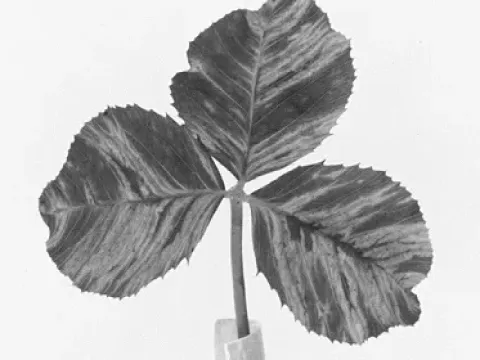
Clover yellow mosaic virus
Comovirus trifolii
The causative agent of the disease is the Clover yellow mosaic virus (CYMV), which belongs to the genus Potexvirus and affects various legume species.
What the section contains
Clover yellow mosaic virus
This phytopathogenic virus consists of filamentous particles that replicate within the host plant's cytoplasm, disrupting its essential biological processes.
The infection is systemic, spreading throughout the vascular system, which makes it extremely difficult for an infected plant to recover completely.
The virus is notably stable in the environment, allowing it to persist in plant debris and soil for extended periods after the crop is harvested.
Transmission occurs primarily through mechanical means via injured tissues or through direct contact between infected and healthy plants during field operations.
The primary sign of infection is the development of a mosaic-like pattern on the leaves, characterized by alternating light-green and dark-green patches.
Early stages often present with vein clearing, which eventually progresses into a more pronounced chlorosis across the entire leaf surface.
The disease causes significant leaf deformation, including curling or crinkling, which severely inhibits the plant's photosynthetic efficiency.
Infected plants exhibit stunted growth compared to healthy ones, leading to an overall poor development of the canopy and reduced biomass.
Typical symptoms also include shortened internodes and a decrease in leaf size, leading to the gradual decline of the plant's health.
The virus thrives in moderate temperatures and high humidity levels, which are typical for spring and early summer growing seasons.
Mechanical injuries caused by grazing livestock, mowing, or general field maintenance are the primary drivers of viral spread.
Perennial legumes and wild weed species serve as primary reservoirs for the virus, allowing it to overwinter and re-emerge in the spring.
Certain insect vectors can facilitate the transmission by carrying viral particles on their mouthparts while feeding on plant sap.
High-density planting creates an ideal environment for the rapid transmission of the pathogen through physical contact between neighboring leaves.
Viral mosaic infection leads to substantial reductions in green forage yield and seed production, resulting in significant economic losses for farmers.
The nutritional quality of the forage derived from infected fields is significantly compromised due to decreased protein and vitamin content.
Infected plants have weakened immune systems, making them highly susceptible to secondary fungal and bacterial infections that can kill the stand.
On pastures, the virus causes the thinning of the stand, allowing weeds to invade and reducing the overall productivity of the land.
Persistent viral infection often leads to premature senescence of shoots, reducing the longevity of the clover stand in the field.
Using high-quality, certified, and virus-free seed material is the most effective fundamental strategy to prevent initial outbreaks.
Regular field monitoring is crucial for the early identification and removal of infected plants to prevent further spread of the pathogen.
Strict adherence to crop rotation cycles, avoiding the replanting of legumes in the same field for at least 3–4 years, helps break the disease cycle.
Controlling weed species that act as alternative hosts for the virus is an essential agronomic practice to keep the disease pressure low.
Disinfecting agricultural tools, mowing blades, and machinery after working in infected areas is vital to prevent mechanical transmission of the virus.