
Clover mosaic virus
Potexvirus trifolii
Description
Symptoms
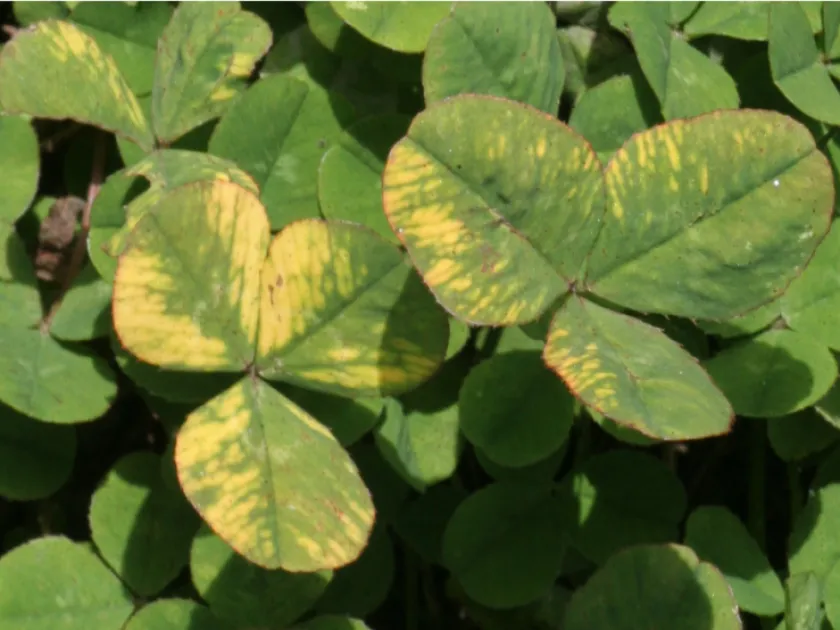
The primary symptom is a distinct mosaic pattern on the leaves, characterized by alternating light and dark green patches. Vein clearing and yellowing along the leaf veins are also frequently observed.
Severe infections often lead to leaf deformation. Leaves may become curled, crinkled, or wavy, significantly altering the canopy structure of the affected crop.
Stunting is a common characteristic of infected plants. Shortened internodes result in a stunted, low-growing appearance, making the crop appear less vigorous than healthy stands.
Reproductive organs are also affected, with a reduction in flower production and deformation of blossoms. The seed set in infected plants is usually poor and unreliable.
Symptoms are most visible during periods of vigorous vegetative growth, although environmental stress may sometimes mask the clinical signs of the disease.
Pathogen
The causal agent is the Clover mosaic virus (ClMV), a member of the genus Potexvirus. The virus particles are filamentous and flexible, known for their high stability in various environmental conditions.
The virus is primarily transmitted mechanically. In agricultural settings, it spreads when contaminated sap from infected plants enters healthy tissue through wounds caused by machinery or livestock.
It acts as a systemic pathogen, moving through the plant's vascular system. It has a broad host range, infecting various species within the Fabaceae family, which makes it a persistent issue in crop rotations.
Unlike some other viruses, insect vectors such as aphids play a minor role in the transmission of this specific virus. Mechanical transfer remains the dominant mode of spread in field conditions.
The virus persists in perennial legumes, which serve as reservoirs during the winter, ensuring that the pathogen remains present in the landscape year-round.
Conditions for development
The virus thrives in moderate temperatures that support active legume growth. Excessive heat may cause symptoms to temporarily disappear, even if the plant remains infected.
Mechanical harvesting and maintenance operations are the main drivers of spread. Mowing equipment can easily transport the virus across large areas of the field during a single cutting cycle.
High plant density increases the efficiency of viral transmission. Physical contact between leaves of neighboring plants facilitates the movement of the virus throughout the population.
The presence of perennial legume weeds along field edges provides a constant source of inoculum. These weeds act as bridges for the virus to enter new plantings.
Moist conditions that promote lush plant growth also favor the transmission of the virus, as they increase the contact surface area between plants in a thick stand.
Why it matters
Clover mosaic virus significantly reduces the biomass of forage crops, leading to substantial yield losses in hay and silage production.
The nutritional quality of infected forage is impaired. The concentrations of essential proteins and vitamins are lower in diseased plants, reducing their value as livestock feed.
Seed production is heavily impacted, with infected plants yielding fewer seeds that often exhibit low germination rates and poor vigor.
Infected stands show reduced winter hardiness and are more susceptible to secondary infections, such as root rots, often resulting in patchy or thin stands.
Over time, the virus causes the decline of long-term perennial legume pastures, necessitating earlier-than-planned reseeding and increasing farm production costs.
Protection
Using certified, virus-free seeds is the most effective preventative measure. Avoiding the use of seeds collected from infected areas is critical to maintaining a healthy crop.
Maintaining spatial isolation from old, infected legume fields is necessary to prevent the initial introduction of the virus into new plantings.
Weed control is essential, particularly targeting perennial legumes that grow as weeds in and around fields, as they act as persistent viral reservoirs.
Strict sanitation of farm machinery is recommended. Tools used on infected fields should be disinfected to prevent the mechanical transmission of the virus to healthy crops.
Selecting and breeding for resistant clover varieties is the preferred long-term strategy for managing the disease and minimizing its economic impact on agriculture.
Discussion
No discussions yet — be the first.