
Coconut cadang-cadang
Cocadviroid cadangi
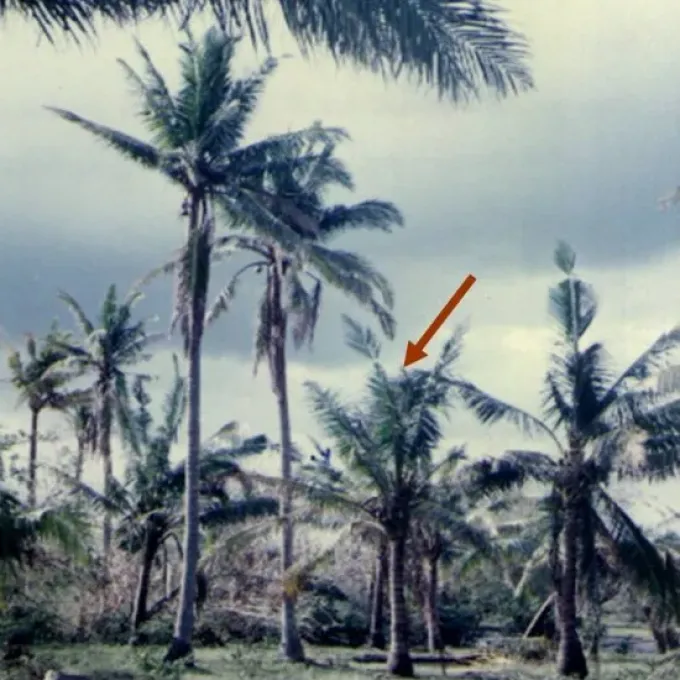
Description
Symptoms
The earliest symptom is the emergence of small, bright yellow, water-soaked spots on the younger leaves, which gradually increase in number and density.
As the infection progresses, these spots coalesce, resulting in widespread chlorosis that severely impairs the plant's ability to conduct photosynthesis.
A classic diagnostic indicator is the reduction in leaf size, leading to a stunted and sparse crown that is easily distinguishable from healthy, lush trees.
Nut production is drastically affected; the palm produces fewer nuts, which are often deformed or smaller in size, eventually leading to complete reproductive failure.
The final stage is characterized by the total cessation of nut production and the death of the apical meristem, which inevitably results in the demise of the entire palm tree.
Pathogen
The causative agent of this devastating disease is the Coconut cadang-cadang viroid (CCCVd). It is a highly specialized infectious agent consisting of a small, circular, single-stranded RNA molecule.
Unlike viruses, this viroid does not code for any proteins and relies entirely on the host plant's transcriptional machinery to replicate itself within the infected cells.
The viroid is incredibly persistent and can remain infectious on contaminated surfaces or pruning tools for extended periods, facilitating its movement across plantations.
It is classified as one of the most significant plant pathogens, causing systemic infection that affects the entire physiology and metabolism of the host palm tree.
The genetic variability of different CCCVd strains explains why the progression of the disease can range from relatively slow to extremely rapid depending on the location and tree health.
Conditions for development
Mechanical transmission is the primary driver of spread, typically through the use of shared or improperly cleaned harvesting tools such as machetes and saws.
Proximity between trees in high-density commercial plantations significantly increases the risk of the viroid spreading through foliage contact or root grafting.
Environmental conditions characterized by high temperature and constant humidity provide a conducive setting for the sustained activity of the viroid within plant tissues.
Human activities, including pruning and routine plantation maintenance, provide ample opportunities for the pathogen to move from infected to healthy trees via contaminated equipment.
The long latent phase, during which the tree is asymptomatic yet infectious, makes it extremely difficult to detect the pathogen before it has already spread to neighboring plants.
Why it matters
Cadang-cadang is widely considered one of the most destructive diseases in the history of coconut cultivation, leading to the loss of millions of productive trees globally.
The economic impact is catastrophic, often forcing small-scale farmers into poverty as the palm is frequently their primary source of income and subsistence.
Affected regions suffer from long-term economic decline, as replacing dead trees is costly and replanted seedlings are often susceptible to lingering remnants of the pathogen.
The ecological impact involves the total destruction of palm-based habitats, affecting local biodiversity and the stability of the surrounding agricultural landscape.
Since there is no chemical cure or resistant cultivar available, the disease poses a permanent, existential threat to the coconut industry in infected tropical regions.
Protection
Strict quarantine measures and the prohibition of transporting plant material from infected areas are the first lines of defense against further spread.
Eradication is the primary control strategy: symptomatic trees must be cut down and destroyed immediately to eliminate the source of the viroid inoculum.
Rigorous sanitation protocols for all agricultural implements are essential; tools must be disinfected with appropriate chemical agents after use on each individual tree.
Integrated plantation management, including careful monitoring and training farmers to recognize early signs, is vital for successful containment of the disease.
Research into developing genetic resistance through biotechnology remains a priority, although breeding naturally resistant coconut palms has proven to be a difficult challenge.
Discussion
No discussions yet — be the first.