
Panicovirus paspali
Panicovirus paspali
Panicovirus paspali is a plant pathogen belonging to the Panicovirus genus, primarily infecting various species within the Poaceae family. It is an obligate parasite that relies entirely on host cell mechanisms for replication.
What the section contains
Panicovirus paspali
The virus particles contain single-stranded RNA, which facilitates rapid evolution and adaptation to different grass hosts under varying environmental conditions.
Transmission of the virus typically occurs through mechanical damage to plant tissues or via specific insect vectors, such as aphids, leafhoppers, or beetles that feed on plant sap.
Once inside, the virus moves systemically throughout the vascular system, effectively colonizing leaves, stems, and reproductive structures.
The pathogen remains viable in infected perennial grass roots and debris during winter, ensuring its survival and transmission to new growth in the following season.
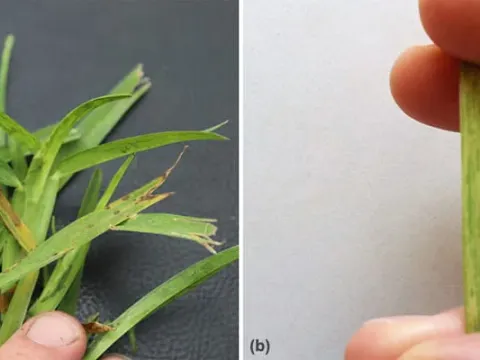
Initial infection symptoms frequently manifest as mosaic patterns, characterized by irregular light green, yellow, or white streaks on the leaf surfaces.
Affected plants often show clear signs of stunted growth, including shortened internodes and a general reduction in biomass compared to healthy specimens.
Leaf deformation is common, with blades sometimes exhibiting curling, twisting, or premature necrosis along the margins or veins.
During the reproductive phase, infected grasses display poorly developed inflorescences, resulting in reduced seed set or complete floral sterility.
In dense stands, patches of infected plants become visually distinct due to their chlorotic appearance and reduced tillering capacity.
The spread of the virus is highly dependent on favorable weather conditions, particularly warm temperatures and high humidity, which support the activity of insect vectors.
Rapid disease dissemination is observed during the active growing season, especially in areas with poor crop management or high weed pressure.
Mechanical operations, such as mowing or livestock grazing, facilitate the spread of the virus by creating wounds that allow the pathogen to enter healthy tissue.
The proximity of infected wild grasses serves as a crucial reservoir, allowing the virus to persist in the field environment year-round.
Stable soil moisture and mild temperatures throughout the day provide an optimal microclimate for both the pathogen and the insect populations that transmit it.
The primary economic impact of Panicovirus paspali is a significant reduction in green forage yield, negatively affecting the productivity of livestock operations.
Infection leads to a decrease in the nutritional value of the forage, specifically lower protein content and reduced digestibility of the plant biomass.
Chronic viral infection weakens the plant, making it far more susceptible to environmental stresses such as drought, extreme temperatures, and opportunistic fungal pathogens.
Reduced vigor and low seed viability in infected plants can lead to long-term degradation of pastures and the necessity for costly field replanting.
Seed production fields are at high risk, as the presence of the virus can compromise the purity and germination potential of harvested seeds.
The most reliable control strategy is the use of certified, virus-free seed lots, as there is currently no direct cure for infected plants once systemic colonization occurs.
Effective management of insect vectors is essential; early detection and insecticide application can significantly reduce the rate of virus spread within a field.
Cultural practices, such as removing wild host grasses around the field perimeter and maintaining proper plant spacing, help minimize the risk of infection.
- Sanitizing farm equipment between fields to prevent mechanical transmission.
- Implementing regular crop rotation to break the virus cycle.
- Optimizing nutrient application to boost plant immunity and tolerance.
Given the lack of antiviral chemical treatments, agricultural management focuses on rigorous phytosanitary monitoring and creating conditions that limit the opportunity for viral transmission.