
Pachyrhizus mosaic virus
Potyvirus pachyrhizus
Description
Symptoms
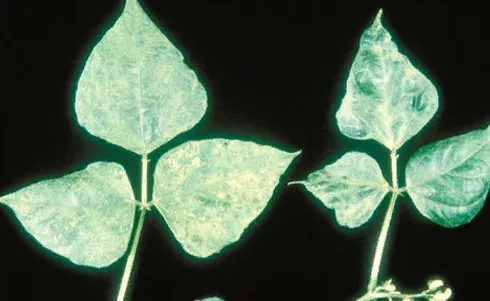
The characteristic symptom is a conspicuous mosaic pattern on leaves, manifesting as alternating light and dark green areas.
Infected plants frequently display leaf deformation, curling, and a reduction in the overall size of the leaf lamina.
Stunting of the entire plant is commonly observed, leading to poor canopy development and reduced biomass accumulation.
Systemic symptoms may include chlorosis or yellowing of the foliage, which negatively affects photosynthetic efficiency.
Reproductive growth is often inhibited, resulting in flower abortion or a significant decrease in the number and quality of pods.
Pathogen
Pachyrhizus mosaic virus is caused by a member of the Potyvirus genus, which contains single-stranded RNA and typically forms filamentous particles.
This viral pathogen exhibits high specificity toward legume crops, effectively infecting various Pachyrhizus species.
The virus relies on aphids as primary insect vectors for transmission within and between fields in a non-persistent manner.
Mechanical transmission also plays a role in the dissemination of the virus during agricultural handling of infected plants.
The viral genome undergoes rapid evolution, which poses challenges for long-term resistance breeding programs.
Conditions for development
The virus thrives under environmental conditions that favor the rapid proliferation and migration of aphid populations.
Warm and humid weather cycles generally accelerate the spread of the disease by facilitating vector activity.
High plant density increases the efficiency of virus transmission, as close foliage contact promotes faster vector movement.
Reservoir weed hosts around the fields serve as critical overwintering sites for the virus, enabling its survival during the off-season.
Agricultural practices that stress plants, such as improper irrigation or soil nutrient imbalances, can exacerbate the impact of the viral infection.
Why it matters
The primary economic impact is a substantial reduction in both tuber yield and seed quality of Pachyrhizus.
Infected plants exhibit reduced metabolic health, making them more susceptible to secondary fungal or bacterial pathogens.
Seed-borne transmission of the virus poses a risk to future harvests if infected seeds are selected for planting.
Total crop failure may occur in cases of early-season infection, leading to significant financial losses for producers.
The resulting decrease in vigor reduces the overall market value of the crop, as tubers may fail to reach sufficient size or quality standards.
Protection
The use of certified, virus-free seed stock is the most important foundation for preventing the establishment of the virus.
Strict phytosanitary practices, including the identification and immediate removal of diseased plants, help minimize the inoculum reservoir.
Implementing a comprehensive vector control program using targeted insecticides can curb the spread of the virus during peak insect activity.
- Regular management and removal of weed species that act as alternative hosts.
- Maintenance of appropriate spatial isolation between different legume fields.
- Use of row covers or physical barriers to protect young plants from aphid attacks.
Focusing on the development of genetically resistant or tolerant Pachyrhizus varieties provides the most sustainable long-term protection against the virus.
Discussion
No discussions yet — be the first.